
Setting aside a few minutes for mindful breathing can make a big difference to your day.
Mindful breathing is an important way to establish a routine and become comfortable with the practice.
What’s important is practice. It’s a tool you can use to bring yourself back to the present moment in stressful situations, and who wouldn’t appreciate having such a valuable tool on hand for those times when you need it?
Learning mindful breathing is straightforward, and it’s as easy as your next breath.
What Is Mindful Breathing?
Mindful breathing is a simple practice available to all. Regularly engaging in it can provide benefits such as a reduction in stress, increased calm and clarity, as well as the promotion of happiness (Catherine, 2010; Kar, Shian-Ling, & Chong, 2014).
Closely tied to deep breathing exercises, mindful breathing takes it a step further and links the benefits of deep breathing with the process and techniques of mindfulness.
Relationship Between Mindfulness and Breathing
Coupling mindfulness and breathing techniques involve cultivating awareness of your experience in the present moment, and living each moment as fully as possible.
From a practical point of view, you may ask how this works.
The breath is the life force. Breathing gives us life; as we inhale, it brings oxygen to cells; when we exhale, we release waste products in the form of carbon dioxide. Different types of breathing affect our body differently; for example, rhythmic breathing balances the nervous system.
A Look at Mindful Breathing Meditation
This form of meditation is often coupled with other types of therapy such as Cognitive-Behavioral Therapy, Dialectical Behavior Therapy, and Acceptance and Commitment Therapy.
Practicing mindful breathing is gently focusing attention on the breath. You begin noticing the breath coming in and going out. You are not trying to change your breathing in any way, and because of this, there are no expectations; you are merely aware of the breath from moment to moment.
This form of meditation practice involves paying close attention to the present moment – especially our thoughts, sensations, and emotions – whatever it is that’s happening.
Mindful breathing can give you a greater sense of control; increased self-awareness; a greater sense of calm, peace, and happiness; and greater resilience in stressful times (Catherine, 2010; Joyce, Shand, Bryant, Lal, & Harvey, 2018; Vago & Silbersweig, 2012).
Providing pain relief
Alongside mindful breathing, Zeidan and Vago (2016) found that mindfulness meditation could be effective in reducing the level of pain intensity. It should be further researched as an alternative to opioids in people with chronic pain conditions like fibromyalgia, migraines, and lower back pain.
The Smith Center for Healing and the Arts (n.d.), which provides cancer support, recommends mindful breathing for clients who are undergoing treatments at their facility. Their clients find that the benefits of mindful breathing meditation can reduce symptoms, as it relieves pain and has fewer side effects than chemotherapy, including less nausea, fatigue, anxiety, and increased immune system functioning.
You don’t have to be undergoing treatment to access the benefits of this form of meditation.
Reduction of anxiety
Mindful breathing activates the parasympathetic nervous system, which is your body’s “rest and digest” system. When the parasympathetic nervous system is activated, your heart rate and blood pressure lowers, which can help reduce anxiety in the process (Vago & Silbersweig, 2012).
Burnout is something we know all too well, and it’s common for adults to feel burnt out from their jobs. Mindful breathing can reduce burnout, cynicism, emotional exhaustion, and anxiety (Roy, Druker, Hoge, & Brewer, 2020).
Decrease in negative thinking
Practicing mindful breathing can decrease negative automatic thoughts, which can be common in people with depression. Mindful breathing can make way for a better mood (Feldman, Greeson, & Senville, 2010).
Roy and colleagues (2020) found a rapid increase in the number of interactive mindfulness apps designed for health and wellbeing. In contrast, little research has been published on developing frameworks for the design and evaluation of digital mindfulness technologies. The researchers found that many existing digital mindfulness applications are purely software-based.
Zhu, Hedman, Feng, Li, and Osika (2017) tested a physical-digital mindfulness prototype that included the use of vapor and light. Results of the first phase showed that 22 of 25 participants (88%) claimed vapor and light could be effective ways of promoting mindful breathing and that the use of vapor could potentially support mindful breathing better than light (especially for beginners).
The researchers concluded that the use of stress reduction tools should be customized and that the design work of mindfulness technology for stress reduction is a complex process.
Mindful Breathing Exercises
Using breathing techniques is an excellent way to control when you feel anxious or stressed.
You can practice mindful breathing first thing in the morning when you wake up to relieve muscle stiffness and back tension, or clear clogged breathing passages.
Here’s a simple way to achieve this: From a standing position, bend forward from the waist with your knees slightly bent, letting your arms dangle close to the floor. As you inhale slowly and deeply, return to a standing position by rolling up slowing, lifting your head last. You then hold your breath for just a few seconds in this standing position. Exhale slowly as you return to the original position, bending forward from the waist. Notice how you feel at the end of the exercise.
Another exercise you could try is Three Steps to Deep Breathing. This worksheet explains abdominal, thoracic and clavicular breathing.
The University of Michigan has examples of several other breathing techniques.
You can also check out our post with 22 Mindfulness Exercises, Techniques, and Activities to further your learning.
9 Useful Scripts and Guides
There are many scripts available with articles giving online training. Here are eight useful scripts and guides to deepen your understanding.
1. A Mindful Breathing Training Exercise
Written for Whole Health for those experiencing pain, this script gives informative instructions and explains what happens during the mindful breathing process.
2. Beginner’s Breathing Meditation: Free Relaxation Script
This free relaxation script gives guidance on how to relax by focusing on your breathing. It recommends keeping sessions brief to maintain concentration when first starting.
3. Mindful Breathing Meditation
This meditation is adapted from Thich Nhat Hanh’s A Short Teaching on Mindfulness Breathing and recommends daily practice for 5–10 minutes at regular times as well as throughout the day in stressful situations and emergencies.
This meditation tool suggests placing the word “breathe” in prominent areas (e.g., mirrors, kitchen cabinet, the dashboard of your car) to remind you to breathe mindfully and deeply throughout your day.
4. Mindful Breathing – A way to build resilience to stress, anxiety, and anger
This meditation from UCLA MARC’s website encourages you to listen while in a comfortable position sitting in a chair or on the floor.
5. Triangle Breathing
This short exercise is the ideal way to include mindfulness in your busy day. Although it is a very simple script, it is easy to learn and practice at any time.
6. Anchor Breathing
Anchor Breathing is a guided meditation script that teaches you how to use breathing as a way to anchor your thoughts in the present.
7. Mindful Breathing
The primary goal of this meditation is to describe mindful breathing as merely a calm, non-judging awareness, allowing thoughts and feelings to come and go without getting caught up in them.
8. The Mindfulness of Breathing: Short Lead-through by Kamalashila
This script is a 20-minute lead-through of the traditional meditation known as ‘The Mindfulness of Breathing.’ Taught by Kamalashila for the last 20 years, this is one of the bases of any Buddhist practice – an essential complement to the Metta Bhavana (development of lovingkindness). Other meditations are also featured on the site.
9. Breath Awareness
Breath Awareness is a six-step guide teaching participants how to become aware of their breath.
Exercises and Activities for Students
PositivePsychology.com has 25 fun mindfulness activities for children and teens, with mindful breathing being a staple of practicing mindfulness.
Mindful Breathing Activity for Kids by teachstarter encourages children to follow the lines in time with the breath.

Pooky Knightsmith Mental Health demonstrates how to do five-finger breathing.

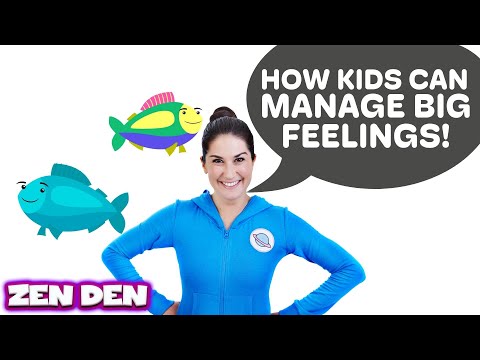
Cosmic Kids has a Kids Meditation cartoon with scenery of a fish pond.
The Happiness India Project (Sandip Roy) incorporated these 7 Mindfulness Steps to Start Practicing with their easy gui.
All you have to do is find a comfortable and quiet place, set the timer on your phone for five minutes, and follow these steps:
Step 1 – Take a deep breath and relax, with your eyes open or closed.
Step 2 – Close your eyes and drop all your concerns now, like setting down a heavy bag.
Step 3 – Now focus on your breath. Bring your full awareness to the sensation of your breathing.
Step 4 – Start counting your breaths softly — count from one to ten, and then start over.
Step 5 – Get more and more absorbed in your breathing.
Step 6 – Now, bring your attention to the presence of the thoughts that are moving through your mind. Take notice of them, then gently bring your focus back to your breath. This is the most critical step of practicing mindfulness meditation.
Step 7 – Feel a growing sense of peacefulness within as you keep settling into the breath with more focus. You may bring the meditation to an end by opening your eyes, stretching out your hands, and getting up.
A Take-Home Message
Mindfulness breathing may incorporate different components such as time and visual cues, but all information is based on the same basic method.
After practicing these techniques, you should be able to notice positive benefits that will enhance your life.
The benefits are too good to pass up, and setting aside only five minutes of your day learning how to control your breathing will help you feel relaxed and calmer, which is an asset not just to yourself but to those around you.
The overwhelming rewards from doing these exercises will benefit you physically and mentally. Holistically, you will feel different, more relaxed, happy, and calm. Remember, there is no right or wrong when doing this; it’s just breathing!
Thanks for reading, and good luck on your journey toward becoming happier, healthier, and more peaceful.
- Catherine, S. (2010). Focused and fearless: A meditator’s guide to states of deep joy, calm, and clarity. Accessible Publishing Systems.
- Feldman, G., Greeson, J., & Senville, J. (2010). Differential effects of mindful breathing, progressive muscle relaxation, and loving-kindness meditation on decentering and negative reactions to repetitive thoughts. Behaviour Research and Therapy, 48(10), 1002-1011.
- Joyce, S., Shand, F., Bryant, R. A., Lal, T. J., & Harvey, S. B. (2018). Mindfulness-based resilience training in the workplace: Pilot study of the internet-based Resilience@ Work (RAW) mindfulness program. Journal of Medical Internet Research, 20(9).
- Kar, P. C., Shian-Ling, K., & Chong, C. K. (2014). Mindful-STOP: Mindfulness made easy for stress reduction in medical students. Education in Medicine Journal, 6(2), 48-56.
- Roy A., Druker, S., Hoge, E. A., & Brewer, J. A. (2020). Physician anxiety and burnout: Symptom correlates and a prospective pilot study of app-delivered mindfulness training. JMIR Mhealth and Uhealth, 8(4), 1-10.
- Smith Center for Healing and the Arts. (n.d.). Practice #2: Mindful breathing meditation. Retrieved from https://smithcenter.org/wp-content/uploads/files/downloads/mindful-breathing-meditation.pdf
- Vago, D. R., & Silbersweig, D. A. (2012). Self-awareness, self-regulation, and self-transcendence (S-ART): A framework for understanding the neurobiological mechanisms of mindfulness. Frontiers in Human Neuroscience, 6.
- Zeidan, F., & Vago, D. (2016). Mindfulness meditation-based pain relief: A mechanistic account. Annals of the New York Academy of Sciences, 1373(1), 114-127.
- Zhu, B., Hedman, A., Feng, S., Li, H., & Osika, W. (2017). Designing, prototyping, and evaluating digital mindfulness applications: A case study of mindful breathing for stress reduction. Journal of Medical Internet Research, 19(6).

