
How to Choose a Pool Cleaner

Patient Tools

Read, save, and share this guide

Use these quick tools to make this medical article easier to read, print, save, or share with a family member.

Medical guide Rx Counseling, Parenting, Mental Wellness & Relationships Feb 8, 2026 47 reads
Related reading

Patient Mode

Understand this article easily

Switch between simple English and easy Bangla patient notes. This is for education and does not replace a doctor consultation.

Spring ushers in new blossoms, warmer temperatures, and the start of pool season. To get maximum enjoyment from your pool, it’s important to keep it clean. An automatic cleaner (also referred to as a pool vacuum) allows you to spend more time splashing around in...

For severe symptoms, danger signs, pregnancy, child illness, or sudden worsening, seek urgent medical care.

বাংলা রোগী নোট এখনো যোগ করা হয়নি। পোস্ট এডিটরে “RX Bangla Patient Mode” বক্স থেকে সহজ বাংলা সারাংশ যোগ করুন।

এই তথ্য শিক্ষা ও সচেতনতার জন্য। এটি ডাক্তারি পরীক্ষা, রোগ নির্ণয় বা প্রেসক্রিপশনের বিকল্প নয়।

Article Summary

Spring ushers in new blossoms, warmer temperatures, and the start of pool season. To get maximum enjoyment from your pool, it’s important to keep it clean. An automatic cleaner (also referred to as a pool vacuum) allows you to spend more time splashing around in your pool rather than on the deck cleaning it. So before the pool season gets underway, make sure your pool...

Key Takeaways

  • This article explains How to Choose a Pool Cleaner: Three Main Pool Cleaner Options in simple medical language.
  • This article explains The Real Question: Build or Buy? in simple medical language.
  • This article explains Spas in simple medical language.
  • This article explains Hot tubs in simple medical language.
Educational health guideWritten for patient understanding and clinical awareness.
Reviewed content workflowUse writer and reviewer profiles for stronger trust.
Emergency safety firstUrgent warning signs are highlighted below.

Seek urgent medical care if you notice

These warning signs are general safety guidance. Local emergency numbers and clinical judgment should always come first.

  • Severe symptoms, breathing difficulty, fainting, confusion, or rapidly worsening illness.
  • New weakness, severe pain, high fever, or symptoms after a serious injury.
  • Any symptom that feels urgent, unusual, or unsafe for the patient.
1

Emergency now

Use emergency care for severe, sudden, rapidly worsening, or life-threatening symptoms.

2

See a doctor

Book a professional medical evaluation if symptoms persist, worsen, recur often, affect daily activities, or occur in a high-risk patient.

3

Learn safely

Use this article to understand possible causes, tests, treatment options, prevention, and questions to ask your clinician.

Before reading

RX Patient Tools

Use these quick guides before reading the article, or return to them when you need help preparing questions for a doctor.

Start here Choose the right pathway for symptoms, reports, medicines, or urgent warning signs. Disease article roadmap Read this topic step by step: meaning, symptoms, warning signs, diagnosis, treatment, prevention, and follow-up. Treatment planner Prepare questions about treatment choices, benefits, risks, side effects, and follow-up. Family & caregiver guide Organize symptoms, reports, medicines, questions, and follow-up safely. Nutrition & diet guide Prepare food, hydration, supplement, and medicine-timing questions safely. Prevention guide Organize risk factors, protective habits, screening, and warning signs. Recovery guide Prepare a safe plan for activity, rehabilitation, warning signs, and follow-up.
Definition

Spring ushers in new blossoms, warmer temperatures, and the start of pool season. To get maximum enjoyment from your pool, it’s important to keep it clean. An automatic cleaner (also referred to as a pool vacuum) allows you to spend more time splashing around in your pool rather than on the deck cleaning it. So before the pool season gets underway, make sure your pool cleaner is working or consider purchasing a newer model to keep your pool’s surfaces thoroughly clean.

If you’re in the market to buy a new pool cleaner, there are three questions you should consider when deciding which pool cleaner is best for you:

  • What kind of pool do you have?
  • What type of dirt and debris do you have?
  • How much maintenance is involved?

How to Choose a Pool Cleaner: Three Main Pool Cleaner Options

Pressure Cleaners

Pressure-side cleaners connect to the pool via a dedicated return line and may require a separate booster pump to operate. Debris is captured in an attached filter bag — keeping it out of your pool’s filtration system and prolonging the life of your pool filter. If your pool system was built with the appropriate plumbing to support a pressure-side cleaner, then a pressure cleaner would be an ideal choice for you.

Good for general cleaning, pressure-side cleaners feature a large throat for exceptional removal of big debris such as leaves, twigs, acorns and pebbles. Plus, pressure cleaners move around distributing clean, and heated water throughout the pool, reducing cold spots. Overall, pressure cleaners are easy to use and simply require routine emptying of the debris bag to maintain effective performance.

As the creators of the first three-wheeled pressure cleaner on the market over 40 years ago, Polaris continues to lead this category with top-performing cleaners like the Polaris Quattro Sport, which capably collects both fine and large debris with its innovative Dual-Stage Filtration and actively scrubs away stuck-on debris with its unique brush design.

Suction Cleaners

Attached through the skimmer or dedicated suction line, a suction-side pool cleaner sucks up debris, capturing it in the leaf catcher, skimmer basket, or pump filter basket. Designed for efficiency, suction cleaners operate quietly while your pool system is running (when swimmers are out of the water).

Suction cleaners do a fantastic job at collecting fine debris like sand and algae. Some models, like the Zodiac MX8™ Elite even feature cyclonic scrubbing brushes to remove stuck-on debris from the floors, walls and tile line. With just a bit of maintenance to empty the skimmer and pump filter basket regularly, a suction cleaner may be the right choice for you.

Robotic Cleaners

Unlike pressure and suction cleaners, robotic cleaners aren’t powered by your pool’s filtration system and can be used with any type of in-ground pool. Just plug it in to an outdoor GFCI (ground fault circuit interrupter) electrical outlet, place it in the pool, and the robotic cleaner goes to work drawing in everything from medium debris to fine particles — like algae, pollen, sand, leaves and pebbles — and collecting it in an easy-to-clean internal canister.

Some robotic cleaners even provide premium features like custom cleaning cycles while maximizing energy efficiency and pool cleaning coverage for quicker cleaning times. A robotic cleaner cleans for just pennies a day, consuming less energy than other types of cleaners, however, they do require a slightly higher level of hands-on interaction — needing to be removed from the pool after each use and regular debris removal from the canister.

Popular models by Polaris® include the 7240 Sport, which offers lightweight handling, Cyclonic Vacuum technology that captures debris without losing suction throughout the cleaning cycle, and features an Easy Clean Filter Canister with a transparent lid so you can see when it’s full. A more advanced option is the Polaris ALPHA iQ+, a best-in-class 4-wheel-drive robotic cleaner with SMART cleaning technologies that learn your pool and that can be controlled by the intuitive iAquaLink™ mobile app via a WiFi connection — allowing you to clean, monitor, schedule, and troubleshoot anytime, anywhere.

Whichever type of automatic pool cleaner you wind up with, start using it when you first open the pool and stick to a routine cleaning schedule to ensure that your pool water remains clear and swim-ready. Think of it as being proactive and preventing potential problems.

Coke vs. cola, spa vs. hot tub: these are among the many soft lines in the sand that we use to describe similar-yet-distinctive things. And like how “soda” and “pop” can mean both Coke and Pepsi, people use the words “spa,” “hot tub” and “Jacuzzis®” interchangeably.

So what sets them apart? Which word describes what you’re looking for best? Read on to learn the difference between a spa and a hot tub, and which one’s a better fit for your backyard.

The Real Question: Build or Buy?

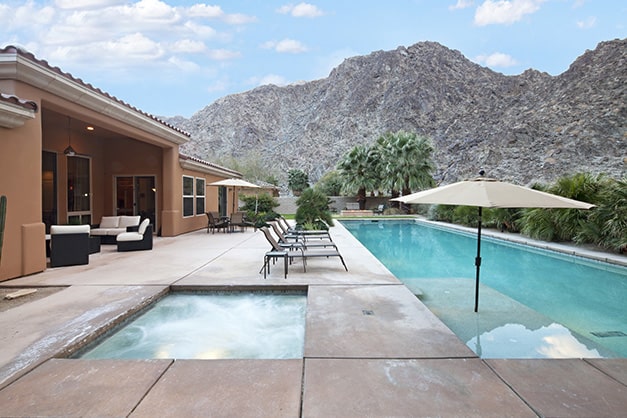
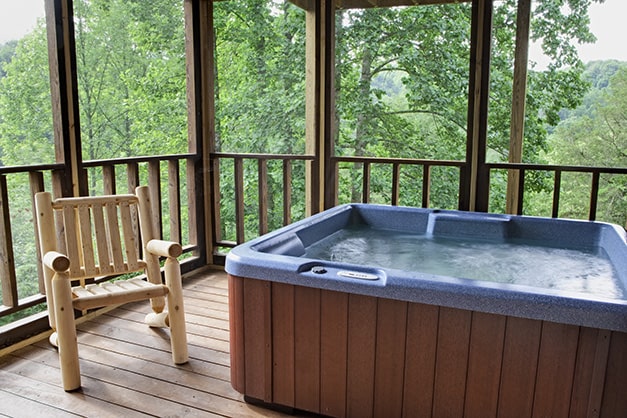
Both hot tubs and spas are hydrotherapeutic, using heat and water jets to create relaxing, pleasurable experiences. The biggest difference between a spa and a hot tub is in their construction: spas are built on site, whereas hot tubs are bought as prefabricated units.

Spas
How to Choose a Pool Cleaner

These in-ground units are typically built as permanent improvements to existing backyard pools. Since they’re constructed from scratch in your backyard—from excavation to steel/rebar installation, to pouring the spa surface and applying a finish—the building process of a spa connected to a new pool will typically take several weeks, depending on the timeline for the pool build. With these custom builds, more space is required in a backyard for the in-ground spa, the connection pool and the equipment pad.

Because they’re built specifically for a homeowner, spas give people the freedom and flexibility to customize the design tailored to their preferred aesthetic. From shape and size to LED lighting, to customized jet placement, overflow edges and other custom design elements, spas can be built to owners’ exact specifications. And, because they’re built in conjunction with a pool, spas use the same equipment pad as an in-ground pool, including the pool heater, pump, and filtration systems.

Another differentiator is the intended purpose of a spa. It’s usually built as a complementary feature to further enhance the enjoyment of a residential pool. Swimmers can easily hop from the pool right into a connected spa to warm up and relax after a swim.

Hot tubs
How to Choose a Pool Cleaner

Since these units are prefabricated, all homeowners need to do is buy and install them. One could easily go to a nearby pool supply store, buy a hot tub unit, and have it installed in their backyard that same day. Because of their prefab nature, hot tubs are by definition above-ground and freestanding. All hot tub components are built into the hot tub “cabinet” or housing, including the plumbing and electrical systems. This allows convenience at a lower cost and takes up less space, but does sacrifice durability and customization.

Since hot tubs are independent from pools and can typically be added at less expense than a pool, they are especially popular with homeowners who are not yet ready to invest in building an in-ground pool or who may not have the space for a pool. It isn’t uncommon for a hot tub to be the main feature for backyard entertainment.

But what about Jacuzzis? Allow us to explain.

Wait, then What’s a Jacuzzi®?

Saying “Jacuzzi vs. hot tub” is a bit redundant. Jacuzzi is to a hot tub as Kleenex is to tissue.

Put simply, a Jacuzzi is a brand of hot tub. The Jacuzzi brand first paved the way for the home hydrotherapy market and delivered it to the masses.

Here’s a little history for you: Claudio Jacuzzi adapted his family’s agricultural water pump technology to fit a residential-sized tub to treat his child’s juvenile pain, swelling, stiffness, or reduced movement. সহজ বাংলা: জয়েন্টের প্রদাহ।" data-rx-term="arthritis" data-rx-definition="Arthritis means joint inflammation causing pain, swelling, stiffness, or reduced movement. সহজ বাংলা: জয়েন্টের প্রদাহ।">arthritis: Rheumatoid arthritis is an autoimmune joint disease causing infection, or irritation, often causing pain, swelling, heat, or redness. সহজ বাংলা: শরীরের প্রদাহ; ব্যথা, ফোলা বা লালভাব হতে পারে।" data-rx-term="inflammation" data-rx-definition="Inflammation is the body’s response to injury, infection, or irritation, often causing pain, swelling, heat, or redness. সহজ বাংলা: শরীরের প্রদাহ; ব্যথা, ফোলা বা লালভাব হতে পারে।">inflammation, pain, and swelling. সহজ বাংলা: রোগপ্রতিরোধ ব্যবস্থার ভুল আক্রমণে জয়েন্টের প্রদাহ।" data-rx-term="rheumatoid arthritis" data-rx-definition="Rheumatoid arthritis is an autoimmune joint disease causing inflammation, pain, and swelling. সহজ বাংলা: রোগপ্রতিরোধ ব্যবস্থার ভুল আক্রমণে জয়েন্টের প্রদাহ।">rheumatoid arthritis. The hot water and jet streams soothed his child’s aching joints. From there, he developed it into a product for sale. Given the opportunity to place the Jacuzzi-brand hot tubs as a prize on the 1950s television show Queen for a Day, the hot tub entered the American cultural lexicon as a symbol of comfort and luxury.

Today, there are many other brands of hot tubs, although in conversation people often refer to any hot tub as a “Jacuzzi.”

What Fits You Best?

So, how do you decide between a spa vs. hot tub? It all comes down to your lifestyle. Whether you prefer a permanent spa that complements your in-ground pool or a less expensive, separate above-ground system offering the same hydrotherapy benefits, both options will help enhance your backyard.

Doctor visit helper

Prepare before seeing a doctor

A simple rural-patient checklist to help you explain symptoms clearly, ask better questions, and avoid unsafe self-treatment.

Safety note: This is not a prescription or diagnosis. For severe symptoms, pregnancy danger signs, children with serious illness, chest pain, breathing difficulty, stroke-like weakness, or major injury, seek urgent care.

Which doctor may help?

Orthopedic doctor, rheumatologist, or physiotherapist depending on cause.

What to tell the doctor

  • Write which joints hurt, swelling, morning stiffness duration, fever, injury, and walking difficulty.
  • Bring X-ray, uric acid, ESR/CRP, rheumatoid factor, or previous reports if available.

Questions to ask

  • Is this injury, osteoarthritis, rheumatoid arthritis, gout, infection, or another cause?
  • Which exercises, supports, or lifestyle changes are safe?
  • Do I need blood tests or X-ray?

Tests to discuss

  • Joint examination and range of motion
  • X-ray when chronic arthritis or injury is suspected
  • ESR/CRP, uric acid, rheumatoid tests when inflammatory arthritis is suspected

Avoid these mistakes

  • Do not ignore hot swollen joint with fever.
  • Avoid repeated steroid injections/tablets without a clear diagnosis and follow-up.

Medicine safety and first-aid guide

This section is for patient education only. It does not replace a doctor, pharmacist, or emergency care.

Safe first steps

  • Drink safe fluids and monitor temperature.
  • In dengue-prone areas, discuss CBC and platelet count when fever persists or warning signs appear.
  • Use tepid sponging for high fever discomfort; avoid ice-cold bathing.

OTC medicine safety

  • For fever, common fever medicine may be discussed with a clinician or pharmacist.
  • Avoid aspirin/ibuprofen-like medicines in suspected dengue unless a doctor says it is safe.

Avoid these mistakes

  • Do not start antibiotics without a proper medical decision.
  • Do not use steroid tablets or injections casually for quick relief.
  • Do not delay emergency care because of home remedies.

Get urgent help if

  • Fever with breathing difficulty, confusion, repeated vomiting, bleeding, severe weakness, stiff neck, or dehydration needs urgent care.
Medicine names, dose, and timing must be decided by a qualified clinician or pharmacist after checking age, pregnancy, allergy, other diseases, and current medicines.

For rural patients and family caregivers

Patient health record and symptom diary

Write your symptoms, medicines already taken, test results, and questions before visiting a doctor. This note stays on your device unless you print or copy it.

Doctor to discuss: Doctor / qualified healthcare provider
Tests to discuss with doctor
  • Basic vital signs: temperature, pulse, blood pressure, oxygen level if needed
  • Relevant blood, urine, imaging, or specialist tests only after clinical assessment
Questions to ask
  • What is the most likely cause of my symptoms?
  • Which warning signs mean I should go to emergency care?
  • Which tests are really needed now?
  • Which medicines are safe for my age, pregnancy status, allergy, kidney/liver/stomach condition, and current medicines?

Emergency warning signs such as chest pain, severe breathing difficulty, sudden weakness, confusion, severe dehydration, major injury, or loss of bladder/bowel control need urgent medical care. Do not wait for online information.

Safe pathway to proper treatment

Care roadmap for: How to Choose a Pool Cleaner

Use this simple roadmap to understand the next safe steps. It is educational and does not replace examination by a doctor.

Go to emergency care if you notice:
  • Severe or rapidly worsening symptoms
  • Breathing difficulty, chest pain, fainting, confusion, severe weakness, major injury, or severe dehydration
Doctor / service to discuss: Qualified healthcare provider; specialist depends on symptoms and examination.
  1. Step 1

    Check danger signs first

    If danger signs are present, seek emergency care and do not wait for online information.

  2. Step 2

    Record the symptom story

    Write when symptoms started, severity, medicines already taken, allergies, pregnancy status, and test results.

  3. Step 3

    Visit a qualified clinician

    A doctor, nurse, or qualified healthcare provider can examine you and decide which tests or treatment are needed.

  4. Step 4

    Do only useful tests

    Do tests after clinical assessment. Avoid unnecessary tests, random antibiotics, or repeated medicines without diagnosis.

  5. Step 5

    Follow up and return early if worse

    If symptoms worsen, new warning signs appear, or treatment is not helping, return for review quickly.

Rural patient practical tips
  • Take a written symptom diary and all previous prescriptions/test reports.
  • Do not hide medicines already taken, even herbal or over-the-counter medicines.
  • Ask which warning signs mean urgent referral to hospital.

This roadmap is for education. A real diagnosis and treatment plan requires history, examination, and clinical judgment.

RX Patient Help

Ask a health question safely

Write your symptom story. A health professional or site editor can review it before any answer is prepared. This box is not for emergency care.

Emergency first: Severe chest pain, breathing trouble, unconsciousness, stroke signs, severe injury, heavy bleeding, or rapidly worsening symptoms need urgent local medical care now.

Frequently Asked Questions

How to Choose a Pool Cleaner: Three Main Pool Cleaner Options Pressure Cleaners Pressure-side cleaners connect to the pool via a dedicated return line and may require a separate booster pump to operate. Debris is captured in an attached filter bag — keeping it out of your pool’s filtration system and prolonging the life of your pool filter. If your pool system was built with the appropriate plumbing to support a pressure-side cleaner, then a pressure cleaner would be an ideal choice for you. Good for general cleaning, pressure-side cleaners feature a large throat for exceptional removal of big debris such as leaves, twigs, acorns and pebbles. Plus, pressure cleaners move around distributing clean, and heated water throughout the pool, reducing cold spots. Overall, pressure cleaners are easy to use and simply require routine emptying of the debris bag to maintain effective performance. As the creators of the first three-wheeled pressure cleaner on the market over 40 years ago, Polaris continues to lead this category with top-performing cleaners like the Polaris Quattro Sport, which capably collects both fine and large debris with its innovative Dual-Stage Filtration and actively scrubs away stuck-on debris with its unique brush design. Suction Cleaners Attached through the skimmer or dedicated suction line, a suction-side pool cleaner sucks up debris, capturing it in the leaf catcher, skimmer basket, or pump filter basket. Designed for efficiency, suction cleaners operate quietly while your pool system is running (when swimmers are out of the water). Suction cleaners do a fantastic job at collecting fine debris like sand and algae. Some models, like the Zodiac MX8™ Elite even feature cyclonic scrubbing brushes to remove stuck-on debris from the floors, walls and tile line. With just a bit of maintenance to empty the skimmer and pump filter basket regularly, a suction cleaner may be the right choice for you. Robotic Cleaners Unlike pressure and suction cleaners, robotic cleaners aren’t powered by your pool’s filtration system and can be used with any type of in-ground pool. Just plug it in to an outdoor GFCI (ground fault circuit interrupter) electrical outlet, place it in the pool, and the robotic cleaner goes to work drawing in everything from medium debris to fine particles — like algae, pollen, sand, leaves and pebbles — and collecting it in an easy-to-clean internal canister. Some robotic cleaners even provide premium features like custom cleaning cycles while maximizing energy efficiency and pool cleaning coverage for quicker cleaning times. A robotic cleaner cleans for just pennies a day, consuming less energy than other types of cleaners, however, they do require a slightly higher level of hands-on interaction — needing to be removed from the pool after each use and regular debris removal from the canister. Popular models by Polaris® include the 7240 Sport, which offers lightweight handling, Cyclonic Vacuum technology that captures debris without losing suction throughout the cleaning cycle, and features an Easy Clean Filter Canister with a transparent lid so you can see when it's full. A more advanced option is the Polaris ALPHA iQ+, a best-in-class 4-wheel-drive robotic cleaner with SMART cleaning technologies that learn your pool and that can be controlled by the intuitive iAquaLink™ mobile app via a WiFi connection — allowing you to clean, monitor, schedule, and troubleshoot anytime, anywhere. Whichever type of automatic pool cleaner you wind up with, start using it when you first open the pool and stick to a routine cleaning schedule to ensure that your pool water remains clear and swim-ready. Think of it as being proactive and preventing potential problems. Coke vs. cola, spa vs. hot tub: these are among the many soft lines in the sand that we use to describe similar-yet-distinctive things. And like how “soda” and “pop” can mean both Coke and Pepsi, people use the words “spa,” “hot tub” and “Jacuzzis®” interchangeably. So what sets them apart? Which word describes what you’re looking for best? Read on to learn the difference between a spa and a hot tub, and which one’s a better fit for your backyard. The Real Question: Build or Buy?

Both hot tubs and spas are hydrotherapeutic, using heat and water jets to create relaxing, pleasurable experiences. The biggest difference between a spa and a hot tub is in their construction: spas are built on site, whereas hot tubs are bought as prefabricated units.

Spas These in-ground units are typically built as permanent improvements to existing backyard pools. Since they’re constructed from scratch in your backyard—from excavation to steel/rebar installation, to pouring the spa surface and applying a finish—the building process of a spa connected to a new pool will typically take several weeks, depending on the timeline for the pool build. With these custom builds, more space is required in a backyard for the in-ground spa, the connection pool and the equipment pad. Because they’re built specifically for a homeowner, spas give people the freedom and flexibility to customize the design tailored to their preferred aesthetic. From shape and size to LED lighting, to customized jet placement, overflow edges and other custom design elements, spas can be built to owners’ exact specifications. And, because they’re built in conjunction with a pool, spas use the same equipment pad as an in-ground pool, including the pool heater, pump, and filtration systems. Another differentiator is the intended purpose of a spa. It’s usually built as a complementary feature to further enhance the enjoyment of a residential pool. Swimmers can easily hop from the pool right into a connected spa to warm up and relax after a swim. Hot tubs Since these units are prefabricated, all homeowners need to do is buy and install them. One could easily go to a nearby pool supply store, buy a hot tub unit, and have it installed in their backyard that same day. Because of their prefab nature, hot tubs are by definition above-ground and freestanding. All hot tub components are built into the hot tub “cabinet” or housing, including the plumbing and electrical systems. This allows convenience at a lower cost and takes up less space, but does sacrifice durability and customization. Since hot tubs are independent from pools and can typically be added at less expense than a pool, they are especially popular with homeowners who are not yet ready to invest in building an in-ground pool or who may not have the space for a pool. It isn’t uncommon for a hot tub to be the main feature for backyard entertainment. But what about Jacuzzis? Allow us to explain. Wait, then What’s a Jacuzzi®?

Saying “Jacuzzi vs. hot tub” is a bit redundant. Jacuzzi is to a hot tub as Kleenex is to tissue. Put simply, a Jacuzzi is a brand of hot tub. The Jacuzzi brand first paved the way for the home hydrotherapy market and delivered it to the masses. Here’s a little history for you: Claudio Jacuzzi adapted his family’s agricultural water pump technology to fit a residential-sized tub to treat his child’s juvenile rheumatoid arthritis. The hot water and jet…

What Fits You Best?

So, how do you decide between a spa vs. hot tub? It all comes down to your lifestyle. Whether you prefer a permanent spa that complements your in-ground pool or a less expensive, separate above-ground system offering the same hydrotherapy benefits, both options will help enhance your backyard. https://www.ncbi.nlm.nih.gov/books/NBK557569/ https://pubmed.ncbi.nlm.nih.gov/3795356/ https://pubmed.ncbi.nlm.nih.gov/21250133/ https://www.ncbi.nlm.nih.gov/books/NBK547718/ https://www.ncbi.nlm.nih.gov/books/NBK557569/ https://pubmed.ncbi.nlm.nih.gov/21250133/ https://www.ncbi.nlm.nih.gov/books/NBK547718/ https://www.ncbi.nlm.nih.gov/pmc/articles/PMC4566164/ https://www.ncbi.nlm.nih.gov/books/NBK470290/ https://www.ncbi.nlm.nih.gov/pmc/articles/PMC2807252/ https://www.ncbi.nlm.nih.gov/books/NBK557569/ https://medlineplus.gov/ency/article/003751.htm

A global war against illness

Help this medical guide reach someone who may need it

Share reliable health information with a patient, family member, caregiver, or colleague. Reading and awareness can help people ask better questions and seek appropriate care.

Continue exploring

Explore this topic across the RX Medical Library

Open a focused A–Z pathway or continue with closely related indexed articles. These links are educational and do not replace personal medical care.

Search this topic
Diseases A–Z Drugs A–Z Lab Tests A–Z Cancer A–Z