Jade plant scientifically referred to as Crassula Ovata, though previously known as Crassula argentea, belongs to the genus Crassula and the Crassulaceae (Stonecrop family). The plant is native to the KwaZulu-Natal and Eastern Cape provinces of South Africa, and Mozambique. It is found in scattered localities in northern and central Natal and near Queenstown in the Eastern Cape and is fairly common in the Eastern Cape from Willow-more to East London and northwards to Queens-town, also in KwaZulu-Natal and Mozambique from Manhoca to Maputo, and is widely seen outdoors in other warm areas, such as California and Mediterranean. Succulent Jade plant is loaded with hordes of common names such as Japanese rubber plant, Japanese-laurel, baby jade, cauliflower-ears, dollar plant, jade plant, jade tree, money plant, money tree, Kerky-bush, Karkay, Pink Joy, Chinese rubber plant, Friendship Tree, Lucky Plant, Kerkei Bush, Japanese Rubber and Dwarf Rubber.
Crassula ovata was first described in England in 1768. The name Crassula is the diminutive of the Latin Crassus which means thick or fat, referring to the fleshy nature of the genus as a whole. The species name ovata means egg-shaped, referring to the leaves. Crassula ovata shares the name “money tree” with Pachira Aquatica which also goes by the same nickname and both are believed to attract money according to Feng shui folklore.
Jada Plant Facts
| Name | Jade plant |
|---|---|
| Scientific Name | Crassula ovata |
| Native | KwaZulu-Natal and Eastern Cape provinces of South Africa, and Mozambique |
| Common Names | Japanese rubberplant, Japanese-laurel, baby jade, cauliflower-ears, dollarplant, jade plant, jade tree, money plant, money tree, Kerky-bush, Karkay, Pink Joy, Chinese rubber plant, Friendship Tree, Lucky Plant, Kerkei Bush, Japanese Rubber, Dwarf Rubber |
| Name in Other Languages | Afrikaans: Beestebal, Kerkeibos, Kerkij, Kerky, Plakkies Arabic: كرسول بيضوي Catalan: Planta de jade, planta de la sort, planta dels diners Chinese: Fěicuì mù (翡翠木), Yànzi zhǎng (燕子掌), Yùshù (玉树) Czech: Tlustice vejčitá Danish: Paradistræ Dutch: Geldboom English: Japanese rubberplant, Japanese-laurel, Kerky-bush, Baby jade, Cauliflower-ears, Dollarplant, Jade plant, Jadetree, Karkay, Pink Joy, Chinese rubber plant, jade tree, Friendship Tree, Lucky Plant, money plant, Kerkei Bush, Money Tree, Jade Tree, Japanese Rubber, Dwarf Rubber Estonian: Portulak-turdleht Finnish: Portulak-turdleht, Rahapuu French: Arbre de jade German: Pfennigbaum, Geldbaum Hindi: Jed paudha (जेड पौधा) Hungarian: Majomfa, Pozsgafa Icelandic: Paradísartré Italian: Albero di giada Japanese: Fuchibenibenkei (フチベニベンケイ), Kanenonaruki (金のなる木), kagetsu, kanenonaruki, narikinsô (ナリキンソウ), Kagetsu (カゲツ) Khoi: T’karkai Korean: Yeomja (염자) Latvian: Olveida krasula Lithuanian: Tikrasis storlapis Macedonian: Jaǰchest debelets (Jајчест дебелец) Norwegian: Pengetre Persian: کراسولا اواتا, گیاه یشم Polish: Grubosz jajowaty, Grubosz owalny Portuguese: Crássula, Planta-de-jade, ensaião-branco, planta-jada, Russian: Tolstyanka yaytsevidnaya (Толстянка яйцевидная), tolstyanka oval’naya (толстянка овальная), Krassula oval’naya (Крассула овальная), Krassula drevovidnaya ovata (Крассула древовидная овата) Slovak: Tučnolist vajcovitý South Africa: Kerkij, kerky, plakkies, t’karkai, umxhalagube Spanish: Crasula de plata, árbol de jade, crásula ovata Swedish: Paradisträd, penningträd Ukrainian: Tovstyanka yaytsepodibna (Товстянка яйцеподібна) Upper Sorbian: Jejkojta tołsćinka Vietnamese: Phỉ thúy Welsh: Briweg wyrddloyw Xhosa: Umxhalagube |
| Plant Growth Habit | Large, much-branched, compact, hairless, rounded, evergreen floriferous bonsai like shrub |
| Growing Climates | Grows among shrubs in open forests, on sandy-clayey grey soil on rocky slopes, hills and fields, often in sheltered ravines, together with a variety of aloes, euphorbias and other succulents |
| Soil | Prefers mildly acidic (pH 6-6.5), dry, well-drained soil. It tolerates various soil types, including loamy, sandy, acidic, neutral and slightly alkaline. It tolerates wind, salt and coastal conditions, but is humidity intolerant. Good drainage is very important as it is prone to root rot |
| Plant Size | Usually 1-1.5 m tall, sometimes up to 5 m |
| Bark | Young bark is smooth and silvery; in older plants the bark peels in horizontal brownish strips |
| Stem | Erect, stout and gnarled, up to 20 cm. in diameter at the base, sub terete, succulent and greyish |
| Branches | Branches are short, succulent, grey-green in colour, becoming brown and woody as they mature. |
| Leaf | Leaves are smooth, rounded, fleshy leaves that grow in opposing pairs along the branches in the petiole up to 4 mm long. Leaves are a rich jade green color, 3-9 cm long and 1.8-4 cm wide, obovate to elliptic, with an entire margin, often with a horny red edge. They have a rounded apex with a distinct pointed end |
| Flower | The sweet-scented, hermaphroditic flowers have radial symmetry and double perianths. The five sepals, each about 2 millimeters long, are fused to one another at the base. The pink or white flower crown is star-shaped and has a diameter of about 15 millimeters |
| Fruit Shape & Size | Follicles that are obliquely oblong-ovoid, up to 6 mm long, dehiscent and hold 30-50 tiny seeds |
| Fruit Color | Green when young turning to Red; purple |
| Propagation | By seed or by root, stem or leaf cuttings |
| Lifespan | More than 2 years |
| Varieties |
|
| Health Benefits |
|
| Culinary Uses |
|
| Precautions |
|
Jade plant Scientific Classification
Scientific Name: Crassula ovata
| Rank | Scientific Name & (Common Name) |
|---|---|
| Kingdom | Plantae (Plants) |
| Subkingdom | Tracheobionta (Vascular plants) |
| Infrakingdom | Streptophyta (land plants) |
| Superdivision | Spermatophyta (Seed plants) |
| Division | Magnoliophyta (Flowering plants) |
| Sub Division | Spermatophytina (spermatophytes, seed plants, phanérogames) |
| Class | Magnoliopsida (Dicotyledons) |
| Subclass | Rosidae |
| Super Order | Saxifraganae |
| Order | Rosales |
| Family | Crassulaceae (Stonecrop family) |
| Genus | Crassula L. (pygmyweed) |
| Species | Crassula ovata (Mill.) Druce (jade plant) |
| Synonyms |
|
Some people believe the jade plant is a symbol of good luck, and it brings money to their home. That’s the reason they call it a lucky plant, money plant, and dollar plant. They keep jade plant just after the entrance door because they have faith in “Jade by the door, poor no more”. In China, many business places, particularly restaurants have a jade plant close by the door supposing it will bring more customers. Some people also consider the jade plant as the symbol of friendship, and they call it a friendship plant. The jade plant lends itself easily to the bonsai form and is popular as an indoor bonsai.
Plant Description
Jade plant is a large, much-branched, compact, hairless, rounded, evergreen floriferous bonsai-like shrub that normally grows about 1-1.5 m tall but occasionally up to 5 m tall. The base is usually sparsely branched. Sometimes a single main trunk of up to 6 centimeters in diameter is formed. The succulent shoots are gray-green. Young bark is smooth and silvery, while in older plants the bark peels in horizontal brownish strips. Stems are erect, stout, and gnarled, up to 20 cm. in diameter at the base, subterete, succulent, and greyish. Although becoming brown and appearing woody with age, stems never become true lignified tissue, remaining succulent and fleshy throughout the plant’s life. The plant grows among shrubs in open forests, on sandy-clayey grey soil on rocky slopes, hills, fields, often in sheltered ravines, together with a variety of aloes, euphorbias, and other succulents. The plant prefers mildly acidic (pH 6-6.5), dry, well-drained soil. It tolerates various soil types, including loamy, sandy, acidic, neutral, and slightly alkaline. It tolerates wind, salt, and coastal conditions, but is humidity intolerant. Good drainage is very important as it is prone to root rot.
Leaves
Leaves are smooth, rounded, fleshy leaves that grow in opposing pairs along the branches in the petiole up to 4 mm long. Leaves are a rich jade green color, 3-9 cm long and 1.8-4 cm wide, obovate to elliptic, with an entire margin, often with a horny red edge. They have a rounded apex with a distinct pointed end. They are generally 4 opposite pairs, with one pair arranged at right angles to the next, and they are clustered towards the ends of the branches. Some varieties may develop a red tinge on the edges of leaves when exposed to high levels of sunlight. Leaves are green and shining when fresh, dark brown, and covered with a peeling layer when dry. Old lower leaves are naturally deciduous.
| Leaf arrangement | Opposite/subopposite |
| Leaf type | Simple |
| Leaf margin | Entire |
| Leaf shape | Obviate |
| Leaf venation | None, or difficult to see |
| Leaf type and persistence | Evergreen |
| Leaf blade length | 2 to 4 inches |
| Leaf color | Variegated |
| Fall color | No fall color change |
| Fall characteristic | Not showy |
Inflorescence
When it matures, it produces small white or pink, star-like shaped flowers in winter. The terminal inflorescence is a top round thyrsus with numerous dichasia. It has a length and a diameter of about 5 centimeters. The inflorescence stem has a length of 15 to 18 millimeters and a diameter of 2 millimeters. The flower stalks are 5 millimeters long.
Flowers
The sweet-scented, hermaphroditic flowers have radial symmetry and double perianths. The five sepals, each about 2 millimeters long, are fused to one another at the base. The pink or white flower crown is star-shaped and has a diameter of about 15 millimeters. Flower parts are generally in fives. Sepals are erect, 1-2 mm, wide-delicate and acute. It’s spreading, lanceolate to lance-oblong and acute petals are 7 millimeters long and 2.5 millimeters wide. The stamens have a length of 5 millimeters. The combination of shorter days, cold nights, and lack of water for several weeks will produce flowering around the beginning of winter.
| Flower color | White |
| Flower characteristic | Spring flowering |
Fruit
Fertile flowers are followed by fruits, which comprise of 3-5 separate follicles that are obliquely oblong-ovoid, up to 6 mm long, dehiscent and hold 30-50 tiny seeds
| Fruit shape | Unknown |
| Fruit length | Less than .5 inch |
| Fruit cover | Unknown |
| Fruit color | Red; purple |
| Fruit characteristic | Inconspicuous and not showy |
Varieties/Types of Jade Plants
Known for its thick branches, green color, smooth leaves, and the pink and white flowers that bloom atop those, the Jade Plant is found in many varieties around the world. Many of these varieties have been cultivated over the years, and many cultivars (cultivated varieties) have been awarded with accolades. Listed below are some of the popular types of jade plants
Crassula Arborescens
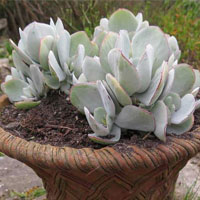
Commonly known as the Silver Dollar Jade, or the Blue Buddha Bush, it is known for its silvery-blue leaves and succulent shrub. It is a slow-growing plant with burgundy edges. The flowers that grow from its tips are long lasting and appear during the autumn-winter period. The plant’s height can be restricted through containerization, but its total height doesn’t rise above the 60-centimeter mark.
Crassula Arborescens Blue Bird Variegate
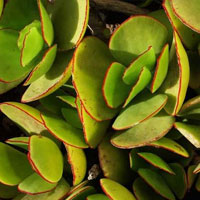
The Crassula Arborescens Blue Bird Variegate is commonly known as the Blue Bird money plant or Jade Plant. It’s a slow-growing shrub like most jade plants that are found in nature, but its leaf coloration sets it apart from other varieties. It has mixtures of aqua, cream, green, and red. Its maximum height covers around 50 centimeters, and its size can be reduced via containerization.
Crassula Arborescens Undulatifolia

The Undulatifolia variety of Crassula Arborescens was first observed in 1974 and was introduced into the market place soon after. It’s commonly known as the Ripple Jade Plant and is preferred for its decorative purposes, so much so that designers specifically prefer it over other types of shrubbery. It has a bonsai-like feel to it, and the waxy leaves make it stand out from other plants. It also has foliage all year round.
Crassula Argentina Gollum
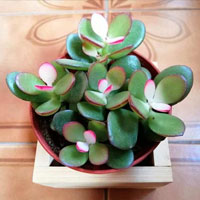
The Crassula Agentea Gollum is commonly known as Lady Fingers because of its curiously protruding, finger-like glossy green leaves. They are cylindrical in shape and red at the tips. The tips bloom during the autumn-winter months with pinkish white flowers.
Crassula Argentina Gollum Variegate
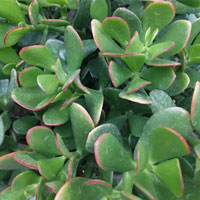
The Variegate variety of the Crassula Argentina Gollum is a standout in combination paintings because of its foliage. It can stand out in an entire painting because of the curious combination of green, white, and pink that it offers. It is considered as an ideal addition to the seaside gardens and flourishes during the winter and autumn months. Its foliage changes color if subjected to low temperatures, dryness, and low nutrition.
Crassula Ovata
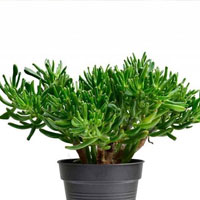
The Crassula Ovata is the most common type of Jade Plant and is known as the money tree, the friendship plant or the Lucky Jade. It was the original variety of the Jade Plant that was first discovered and is one of the most popular varieties in circulation today. It is very hardy and the fastest growing of all the Ovata cultivars. Pinkish white flowers appear on its tips like for every Jade Plant during winter, and its height can extend to over 2 meters in some cases. People consider it ideal for planting near coastal areas. It is also used as a divider or display in gardens when trimmed and shaped properly.
Crassula Ovata Botany Bay
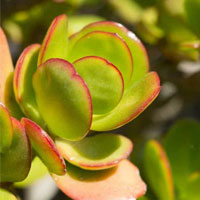
The Botany Bay variety of the Crassula Ovata was recently introduced into the market in 2011. It is a compact and bushy plant that can be shaped and held in shape if confined to a pot. Its foliage experiences reduced stretching in low light conditions. The foliage also develops a red blush during dry conditions, usually prevalent during the winter months. It can grow to a height of 1 meter over five years under ideal conditions.
Crassula Ovata Harbor Lights
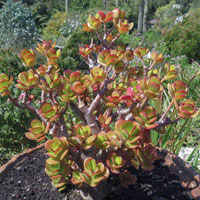
This variety is instantly recognizable due to its characteristic red color. Its distinct color has made it a popular houseplant. It has distinctly smaller leaves than that of the Crassula Ovata and becomes extremely red during the winter months. Pinkish white flowers, of course, appear during the autumn and early winter months, giving them an overall radiant appearance. It is considered ideal for seaside residential decoration.
Crassula Ovata Hobbit

Commonly known as the Bonsai Jade Tree, this variation is named after the fictional race of people in the Lord of the Rings novels by J.R.R. Tolkien. This variety is known for its small height, no larger than 30 centimeters. The species emerged from the Paradisia Nursery in Victoria. It is known to exhibit similar features to its related species such as the red tips and the pinkish-white flowers in early winter.
Crassula Ovata Hummel’s Sunset
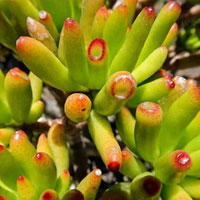
This variety was appreciated by the Royal Horticultural Society in 1993 for its spectacular foliage color, and its thick bonsai-styled trunk. It was awarded the prestigious Garden Merit award by the society that year. For this reason, it has become an increasingly popular houseplant.
Crassula Ovata Little Jade Tree
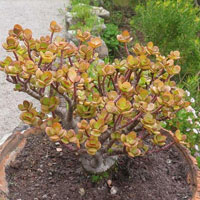
Known as the Little Jade Tree, its breed is as young and small as its name suggests. It was introduced into the marketplace in 2015. Found by chance by Jan Morgan from the Glen field Wholesale Nursery Picton site, this plant is small and compact and can grow to a maximum height of 40 centimeters. Its popularity as a wedding gift or a party favor is considerable, and it can be found in small dish gardens or the indoors of houses.
Crassula Ovata Minima
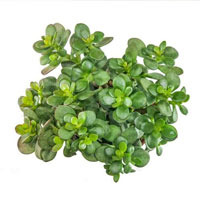
Known as the Baby Jade or the Miniature Jade, this is quite different from the Little Jade Tree variety of the Crassula Ovata species. Its growing tips tend to huddle together and branch out as well, creating a bushy, full appearance in small containers. Flowers appear colored pink and white during the winter months. The plant can grow to a height of 60 centimeters and it looks great when placed on house balconies as well as in their courtyards. It is a popular tabletop decoration and a great wedding gift or party favor.
Crassula Ovata Pink
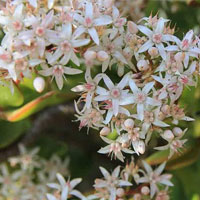
The Pink variety of the Crassula Ovata is named so because of its bushy exterior and the exceptional number of flowers that blooms every year. The foliage develops a red blush during the year under very dry conditions. The early winter and late autumn months show small pink flowers appearing on its tips that fill the exterior of the plant. It can grow to a height of 1 meter over a period of five years.
Portulacaria Afra
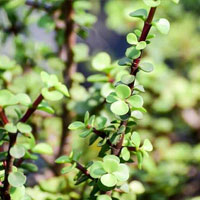
This is called the Chinese Jade Plant or the Pork Bush. Its decorative and structural succulent features make it a very popular houseplant, albeit one that is kept outside. It can grow up to 2 meters in height and can be controlled with proper trimming and shaping. It can withstand long drought and heatwaves but doesn’t flower during cultivations. It is not a flowering plant at all; hence it doesn’t exhibit the white and pink flowers during winter, unlike its relative species.
Portulacaria Afra Aurea
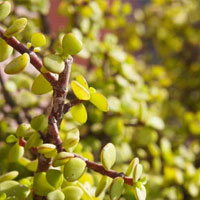
The Afra Aurea is beautifully nicknamed the Yellow Rainbow Bush or the Yellow Elephant’s food. The Afra Aurea changes colors throughout its growth. Its shades are influenced by the time of year and the amount of water it gets as well as the fertilizer that is used to grow it. It thrives in both full sunlight and light shade, and rarely displays the whitish-pink flowers that are characteristic of Jade Plants. It can grow to a height of 1 meter.
Portulacaria Afra Cascade
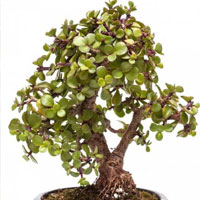
The Cascade is known as the Prostrate, the Low Elephant Bush, or the Trailing Elephant Bush. It is covered with rounded, fleshy leaves that grow from maroon/mahogany stems. It’s not grown as a flowering plant and can grow to 1 meter in size. It can be used for cascading over dry retaining walls.
Portulacaria Afra Large Leaf
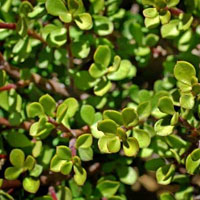
The Large Leaf variety is known as the Green Penny Jade. Its rounded, fleshy leaves grow on dark red stems but don’t sprout any flowers. Although the plant is known to grow to about 2 meters in length, it can be controlled by trimming. It is a popular houseplant used to decorate balconies and patios. It can also be shaped into hedges and fences as well as screens.
Portulacaria Variegate
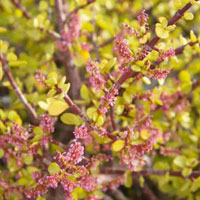
The Variegate is known as the rainbow bush. It’s a succulent shrub that has creamy leaves with a light green center stripe. It has a tinge of magenta on the edge of the leaf which persists all year round. It doesn’t flower in cultivation and can grow to a height of 1 meter.
Health benefits of Jade Plant
Listed below are some of the popular health benefits of using Jade plants
1. Treat nausea
The Jade plant is often used as a treatment of nausea, and in China, several jade plants with pointed leaves, named as Stone Lotus, are also used to relieve diabetic symptoms.
2. Treat epilepsy, diarrhea, corns, and purge the intestines
The Jade plant is also used as a cure for vomiting and is used in Africa for the diagnosis of epilepsy, maize, diarrhea, and intestinal purification.
3. Treat warts
Leaf of the jade plant was used to treat warts which are actually small circumscribed tumors of the outer layer of the skin. They are caused by forms of the infectious human papillomavirus (HPV). However, leaves were sliced in half and attached the moist inside to the wart for a few hours, or overnight. After 3 applications, it can reduce the growth of the infection.
4. Anti-diabetic and Antioxidant properties
Jade plant leaves consist of phytochemicals such as saponin, phenol, phytosterol, steroid, terpenoid, flavonoid, carbohydrates, and proteins. These compounds help to prevent alpha-amylase activity that helps to decreases the absorption of glucose and thus reduce blood glucose level.
Jade plant tea and juice are beneficial to treat symptoms of diabetes. Also, search harmful radicals from the body and protect from various diseases.
5. Treat high blood pressure
Leaves of the jade plant consist of a good amount of Gallic acid which helps to reduce the tension of the blood vessel walls. Thus this plant shows a wonderful effect on the widening of blood vessels, which in turn increases blood flow and helps to, lower blood pressure.
6. Antimicrobial properties
Jade plant leaves are rich in alkaloids like Berberine and Sanguinarine, and saponins. These bioactive compounds fight against numerous bacteria such as Escherichia coli, Pseudomonas, and Klebsiella sp. thus protecting from various infections
Different benefits of Jade plant on Home Environment
Here are so many jade plant benefits which make your home indoor air neat and clean. These small and tiny hanging succulents give several benefits to your home environment as follows:
Improves Indoor Air Quality
In several previous researches, scientists have discovered that indoor air can be just as contaminated and dangerous as outdoor air. It may also intensify to “Sick Building Syndrome,” some of the signs involve asthma, dizziness, fatigue, nausea, and loss of focus. Natural ventilation is the only approach to avoid this; the addition of air-filtering houseplants such as snake plants, golden pothos, spider plants, dracaena, aloe vera, and jade plants often functions here.
Increases indoor Humidity
Relatively low moisture indoor air can impact your safety and appearance. Soft eyes, flaky hair, itchy neck, static energy, cold, fever; asthma is some of the indications. Infectious microbes and viruses may even live in dry soil for an extended period. Humidifiers are the primary tool to improve indoor moisture; even houseplants also have a contribution. Plants like Pothos, Peace Lily, Spider Plant, Jade Plant helps to increases humidity, and Philodendron are better suited for this function.
Absorbs CO2 in Night
Jade plant as well as several other arid area species of plants, such as Mother-in-Law Tongue, adopts the unusual carbon fixation Metabolism. It allows them the power to consume CO2 at night. It’s one of the very few plants you can plant inside to increase the quality of the air during night times.
Used as Beautiful Indoor Small Hanging Garden
Jade plant adds a touch of beauty, looks beautiful with shiny, oblong, or circular leaves, sparkling in a dark shade of black. It suits every sort of home interior due because of its flappy appearance, resembles a small tree. The sleek design recommends it a great for dining table and office seat. If that wasn’t enough, here you’ll also notice a pretty pink and white flowering during late winter and early spring.
Brings Luck for home
Jade plant is supposed to promote growth and prestige in Asian countries. It’s a sign of good luck and stability in Astrology since it’s an evergreen herb. It’s the ideal plant for one’s homes and offices. Even, a jade plant may be a perfect wedding gift and a lovely home decoration.
Low Maintenance and Perfect Growing
Jade plants have one such benefit that they don’t need regular fertilizing, pruning, and other stuff that a normal plant needs. These plants are slow growers and it takes years to reach a specific height. The only requirement you should fulfill is to protect them from colder climates, excessive water, and ideal temperature. This plant has low maintenance requirements and they grow many days without water and are still able to maintain themselves for days.
More Attractive Look
Indoor plants are best know for providing clean air but also they enhance the look of your room or hall where you spend most of your time. Many people like to grow these plants as they fit in the background and we feel part of nature with them. They perfectly combine with the interior of our house and we don’t even get bored with them, even our creativity increases while watching them grow and we constantly think about them and how to care for them so they keep on thriving.
Traditional uses and benefits of the Jade plant
- Leaves are used medicinally: boiled in milk, they are a remedy for diarrhea; used to treat epilepsy and corns, and used as a purgative.
- Leaves and roots are used by local populations as a remedy against nausea, epilepsy, and diarrhea.
- Extract from its leaves is used to treat wounds, stomach upset, warts, and diabetes.
- For skin warts, the Jade plant’s juice is applied to it overnight for three days.
- Traditional Chinese medicine has mentioned the Jade plant as a diabetes remedy.
- Drinking tea made from Jade leaves helps to mellow out diabetes symptoms.
- The Jade plant helps to open the energy flow in the body.
- It is used to treat wounds, boils, cuts, and scratches.
- Juice of jade is used to treat sores on the lips.
- Jade juice solution is used as a rinse in sore throats.
- Jade juice solution is used to cure inflammation in arthritis and itching and swelling of mosquito bites.
- Leaves help in the healing of the gastric and duodenal ulcers.
- It is also used to get rid of corns.
- Infusion of the leaves helps to treat varicose veins.
- Jade juice and liquid Vaseline are used to treat hemorrhoids.
- In folk medicine, jade leaves are used to treat high blood pressure and can alleviate headache, dizziness, stomachache, and liver injury.
- The Kamba community used its juice to heal a burn, wounds on the skin.
- Other communities like the Maasai use it as a relief for stomach upsets.
Other Facts
- The leaves are a favorite food for tortoises.
- The Jade plant is believed to attract prosperity and fortune in Asian countries.
- Jade plant can be a fantastic wedding favor and housewarming gift.
- The Jade plant may reduce Carbon dioxide in night, but it performs photosynthesis in the day through the Calvin cycle.

- HELPS IMPROVES APPEARANCE OF SCARS AND STRETCH MARKS - Dermatologist recommended and clinically proven for scars, stretch marks, uneven skin tone and so much more
- PACKED WITH NATUAL OILS - Vitamin E helps maintain healthy looking skin while natural Chamomile and Lavender Oil calm and soothe
- LOCKS IN ESSENTIAL HYDRATION WITHOUT CLOGGING PORES - Bio-Oil Skincare Oil is a uniquely formulated, non-greasy body oil that hydrates skin and helps retain essential moisture
- PLANET & ANIMAL FRIENDLY — Vegan friendly, paraben free, cruelty free, non-comedogenic, and 100% recyclable
- FORMULATED FOR ALL SKIN TYPES - Helps soften skin for all types, tones, textures and safe for use on face and body and won't clog pores

or

- NATURALLY EXTRACTED and NUTRIENT DENSE: Nutiva’s all-natural cold press extraction process yields a pure, light-tasting, nutrient-rich oil containing 63% medium chain triglycerides and 50% lauric acid without the use of dangerous and harmful chemicals, hexane, or heat.
- PREMIUM DIET COMPATIBILITY: Nutiva Virgin Coconut Oil is an ideal addition to vegetarian, vegan, raw, whole food, paleo, ketogenic, and gluten-free diets.
- HEALTH AND BEAUTY: Nutiva Virgin Coconut Oil has natural moisturizing and deep conditioning properties, making it an invaluable part of every body care regimen.
- COMMITMENT TO QUALITY: Nutiva partners with organic farmers to source the world’s finest fresh, organic virgin coconuts and stringently adheres to USDA certified organic and non-GMO guidelines to deliver superfood that is good for you and good for the planet.
- EASY TO USE PACKAGING: Nutiva Virgin Coconut Oil is packaged in safe, convenient, BPA-free packaging.
- Directions: No Refrigeration Required. Coconut Oil Is Solid At Room Temperature And Melts At 76 Degrees, With A Smoke Point Of 350 Degrees. Please Note That There Is No Difference Between Virgin And Extra-Virgin Coconut Oil. We Previously Used The Term "Extra-Virgin" To Emphasize Our Commitment To Quality, However, As A Leader In Coconut Oil, Nutiva Is Committed To Complying With Global Regulations That Do Not Allow The Term "Extra-Virgin" In Regard To Coconut. When You See The Term Virgin On Our Packaging, Rest Assured That The Product Is Still The Highest Quality And Has Not Changed.
- Allergen Information: Peanut Free
References
- https://www.ncbi.nlm.nih.gov/books/NBK218749/
- https://www.ncbi.nlm.nih.gov/books/NBK551014/
- https://www.ncbi.nlm.nih.gov/books/NBK551727/
- https://www.ncbi.nlm.nih.gov/books/NBK65874/
- https://www.ncbi.nlm.nih.gov/books/NBK304428/
- https://www.ncbi.nlm.nih.gov/books/NBK218759/
- https://www.ncbi.nlm.nih.gov/books/NBK556048/
- https://www.ncbi.nlm.nih.gov/books/NBK218749/
- https://www.niehs.nih.gov/health/topics/agents/essential-oils/index.cfm
- https://www.sciencedirect.com/book/9780443062414/essential-oil-safety
- https://www.sciencedirect.com/topics/agricultural-and-biological-sciences/essential-oils
- https://www.elsevier.com/books/essential-oil-safety/tisserand/978-0-443-06241-4
- https://www.amazon.com/Essential-Oils-Fully-Revised-Updated/dp/1787752291
- https://www.frontiersin.org/articles/257193
- https://www.tandfonline.com/toc/tjeo20/current
- https://www.intechopen.com/chapters/68027
- https://onlinelibrary.wiley.com/doi/full/10.1002/ptr.6854
- https://www.nature.com/articles/s41598-020-68823-4
- https://www.cancer.gov/about-cancer/treatment/cam/patient/aromatherapy-pdq
- https://www.researchgate.net/publication/254247133_
- https://link.springer.com/article/10.1365/s10337-010-1680-0
- https://fdc.nal.usda.gov/ndb/foods/show/
- https://www.nccih.nih.gov/health/herbsataglance
- https://portal.nifa.usda.gov/web/crisprojectpages/0092887
- https://academic.oup.com/database/article/doi/10.1093/database/bau120
- https://www.cambridge.org/core/journals/weed-science/article/herbicide-effects-of-essential-oils/
- https://www.fs.fed.us/wildflowers/ethnobotany/oils.shtml
- https://www.karger.com/Article/Abstract/501062
- https://en.wikipedia.org/wiki/Fish_oil
- https://en.wikipedia.org/wiki/Essential_oil
- https://en.wikipedia.org/wiki/List_of_essential_oils
- https://en.wikipedia.org/wiki/Types_of_plant_oils
- https://www.britannica.com/topic/essential-oil
- https://www.planttherapy.com/
- https://academic.oup.com/plphys/article/54/4/560/
- https://www.healthbenefitstimes.com/category/oils/
- https://www.aromaweb.com/essentialoils/default.asp
- https://books.google.com/books/about/Herbs_And_Essential_Oils_Book.html?
- https://books.google.com/books/about/Herbal_Oils_for_Health_Beauty.html?id=C_MX9tKpttMC
- https://books.google.com/books/about/375_Essential_Oils_and_Hydrosols.html?id=-y68r63LPYgC
- https://books.google.com/books/about/375_Essential_Oils_and_Hydrosols.html?id=-y68r63LPYgC
- https://books.google.com/books/about/Herbal_Oils_for_Health_Beauty.html?id=C_MX9tKpttMC
- https://www.nytimes.com/wirecutter/reviews/best-essential-oil-diffusers/
- https://www.niehs.nih.gov/health/topics/agents/essential-oils/index.cfm
- https://www.nccih.nih.gov/health/atoz
- https://clinicaltrials.gov/ct2/show/NCT02764567
- https://fda.report/Company/Young-Living-Essential-Oils-Lc
- http://www.fao.org/3/ad420e/ad420e.pdf
- https://www.healthywa.wa.gov.au/Articles/A_E/Essential-oils
- https://www.niehs.nih.gov/health/topics/agents/essential-oils/index.cfm
- https://www.consumerreports.org/health-product-recalls/walmart-recalls-better-homes-gardens-aromatherapy-room-spray-a3078352126/
- https://time.com/5203122/are-essential-oils-safe/
- https://www.itis.gov/servlet/SingleRpt/SingleRpt?search_topic=TSN&search_value=507748#null
- http://www.hear.org/pier/species/crassula_ovata.htm
- https://www.cabi.org/isc/datasheet/113574
- https://gd.eppo.int/taxon/CSBOV
- https://www.nparks.gov.sg/florafaunaweb/flora/2/1/2169
- http://www.theplantlist.org/tpl1.1/record/kew-2741970
- https://en.wikipedia.org/wiki/Crassula_ovata
- http://www.flowersofindia.net/catalog/slides/Jade%20Plant.html
- http://www.llifle.com/Encyclopedia/SUCCULENTS/Family/Crassulaceae/18609/Crassula_ovata
- https://edis.ifas.ufl.edu/publication/FP153https://plants.usda.gov/home/plantProfile?symbol=CROV3
- http://germoplasma.iniaf.gob.bo/gringlobal/taxonomydetail.aspx?id=404524
- https://www.missouribotanicalgarden.org/PlantFinder/PlantFinderDetails.aspx?taxonid=279445