Barberry has various other names such as common barberry and European barberry. The botanical name of barberry is berberis Vulgaris that belongs to Berberidaceae family and Plantae kingdom. It is closely related to the Nepalese barberry (Berberis aristata), Indian barberry (Berberis asiatica) and Oregon grape (Berberis or Mahonia aquifolium) all are very active medicinally. It is a popular garden shrub and is grown for its ornamental leaves and yellow flowers. The plant is native to Europe and Asia, and it has been introduced to North America where it can be found growing wild from Canada to Pennsylvania. Few of the popular common names of the plant are European Barberry, Agracejo, Barberry, Berberidis Cortex, Berberidis Fructus, Berberidis Radicis Cortex, Berberidis Radix, Berbéris Commun, Berberis jacquinii, Berberis sanguinea, Berberitze, Berberry, Berbis, Common Barberry,Épine-Vinette, Espino Cambrón, Jaundice Berry, Mountain Grape, Oregon grape,Pipperidge, Piprage, Sauerdorn, Sow Berry and Vinettier. Barberry also has medicinal uses and has been used for more than 2500 years in Asia and the Mediterranean for a variety of ailments. The fruit, bark, and roots of the barberry plant are used to make herbal medicine.
Plant Description
Barberry is an evergreen, deciduous shrub that grows about 4 meters (13 ft.) high. The plant is found growing in abandoned fields, coastal grassland, early successional forest, flood plain forest, forest wetland, open disturbed area, pasture, planned forest, roadside, shrub wetland, vacant lot, garden, fence rows, waste spaces, clearing, thickets and woodlands. It often grows in acidic sandy clay loams but also grows in neutral or alkaline clays and nutrient-poor soils. Roots are thick and spread easily. The stem is woody, 8 to 10 feet high, upright and branched, smooth, slightly grooved, brittle, with white pith, and covered with an ash-colored bark.
Leaves
Leaves are small oval, 2–5 centimeters (0.79–1.97 in) long and 1–2 centimeters (0.39–0.79 in) broad, with a serrated margin; they are borne in clusters of 2–5 together, subtended by a three-branched spine 3–8 mm long. In the fall, common barberry leaves turn a red, orange, or purple color. The inner wood is yellow in color. Spines are double or triple branched.
Flowers
Inflorescences are 2-6 cm long and contain 10-20 flowers. Flowers are yellow, 4–6 millimeters (0.16–0.24 in) across. Individual flowers have 6 petals,6 stamens, and are about 8 mm wide. The flowers are yellow and sometimes with a differently colored strip, red-stripped, and with senary sepals or petals. Petals are often smaller than sepals. The stamens are scenery and often smaller than petals. The flowers have an unpleasant odor. Flowering normally takes place from May to June.
Fruit
Fertilized flowers are followed by Small oblong and slightly curved red berry 7–10 millimeters (0.28–0.39 in) long and 3–5 millimeters(0.12–0.20 in) broad. Each fruit contains 1- 3 small black seeds. Seeds are about 6 mm long. The fruit is dispersed by birds and other wildlife.
History
In Egypt the berry juice was taken as a remedy for fever. A generic name may derive from the Phoenician word “barbar,” which means glossy,referring to the sheen on the leaves. In Italy and parts of Europe, barberry is called Holy Thorn, because it is supposed to have formed part of the crown of thorns made for our Savior. Its bitter taste also gave the plant the name wood sour. During the medieval period, this shrub could be seen growing near churches and monasteries. However farmers from the mid-17th century came to blame the plant for “blighting” wheat and it was banished to the hedgerows, becoming increasingly scarce. The “blight” was explained in 1865 by the fact that barberry is actually an intermediate host plant for black rust, a disease of wheat.
Health Benefits of Barberry
Barberry is an evergreen, deciduous shrub that bears oval-shaped red fruits. Barberry is known for its medicinal uses for more than 200 years. It is a cleansing herb that contains excellent stimulating and sedative properties that help fight several disease-causing organisms. You can consume barberry orally, and also be used externally for treating a number of health issues. Let us know about some of the best health benefits of barberries for human health.
1. Eases Up Inflammation and Infections
Barberries help in easing inflammation. Actually, inflammation is the root of some health ailments and treating these inflammations can actually be helpful in making the symptoms a bit manageable.
Research has stated that barberry consists of some potential antibacterial and antifungal agents in it and this makes the fruit a great solution to fight infection.
2. Beneficial in treating Diarrhea
Diarrhea is caused by specific bacteria that could be naturally treated using barberry. However, when the condition is serious, it is very much required to contact your doctor on an immediate basis.
3. Controls Blood Sugar
Sugar present in barberries could be harmful for diabetes patients. However, research has stated that because of the presence of berberine, consuming the fruit in moderate amount could actually help in lowering the blood sugar levels in an effective manner.
4. Detoxifies Blood
One of the best known health benefits of barberry is that it is beneficial in cleansing the blood. Barberry could help in improving the function of liver, which in turn enhances the blood detox in your body
5. Treat Gastrointestinal Infections
One of the most amazing benefits of barberries is that it can help in treating gastrointestinal infections because of the presence of some powerful antibacterial and anti-fungal agents in it.
6. Controls Cholesterol levels
Barberries are known to control cholesterol levels. Dietary fiber present in barberry is wonderful to bind unnecessary cholesterol in the intestine; which in turn encourages and enhances the production of good cholesterol levels and this helps in controlling the cholesterol level.
7. Eye Health
Barberries are known to be beneficial for eye health. Berberine present in barberry could actually promote eye health. This means, it is not only able to improve vision, but also be able to avoid any macular degeneration that is related to vision.
8. Stimulates the WBC Production
Barberry is known to be beneficial in stimulating the production of WBCs. Berberine chemical compound present in barberries, helps in this. Optimal production of white blood cells is helpful in promoting normal blood clot and accelerating the wound healing.
9. Balance menstrual problems
If you have irregularities in your menstrual cycle, it maybe worth taking barberry. Plant has been used as an herbal remedy for centuries, and you’ll find that it can balance things out.
10. Lowers Blood Pressure
Hypertension is not a condition that is pretty easy to deal with. Barberries could help in relaxing the blood vessels and this will improve the blood flow and help the heart work properly. This in turn will result in lowering the blood pressure.
11. Improves Flow of Blood
Normal flow of blood is essential for optimal distribution of nutrients and oxygen in the body. Barberry helps in enhancing the blood flow by relaxing the blood vessels and easing up the function of heart.
12. Improves Digestion
Almost all fruits consist of high amount of fiber in them that are great for digestion. Barberry is also helpful in improving digestion because of the rich fiber content. Apart from this, the antibacterial and anti-fungal effects of barberries could help keeping digestion healthy and free from infection.
13. Treats Skin Disorders
Certain types of skin disorders could be cured by using barberry. Acne, psoriasis, etc. are some of the skin disorders that can easily be treated with barberries, as it consists of some effective antibacterial and anti-fungal agents for fighting infections.
14. Treat Anemia
Barberries are beneficial in treating anemia. Anemia occurs when the body is suffering from iron deficiency. There may be a lot of causes for iron deficiency. However, we know barberry is loaded with Vitamin C and thus could be helpful in dealing with this problem.
15. Urinary Tract Treatment
Barberry supports the urinary system, bladder and kidney function, and can help alleviate such symptoms as cramping, inflammation,irritation, and discomfort. It is excellent for kidney stones and gallbladder problems. Barberry may optionally be used as a homeopathic component or an adjunct component.
16. Supports cardiovascular and neural system
Barberry acts as an effective medicine against various cardiovascular issues such as hypertension and tachycardia. It also acts as a curing medicine for certain neural disorders namely epilepsy and convulsion.
Ayurvedic Health Benefits of Barberry
- Jaundice: Make a decoction of Barberry. Take 1/2 teaspoon once a day.
- Menstrual disorders: Make a decoction of the leaves of Barberry. Take it two times a day.
- Skin diseases: Take Barberry powder and sprinkle liberally on bacterial Skin Infections and septic Wounds.
- Scurvy: Boil few Barberry leaves in 1 cup of water. Drink this half cup decoction once a day.
- Ophthalmic: Crush dried roots of Barberry to make powder. Add 8 g of it in lukewarm water. Use it as an Eyewash or Eye Compress
- Gallstones: Take Barberry bark and roots in equal proportion. Boil in water to make a decoction. Have 2 teaspoons twice a day.
- Urinary Tract Infections: Steep One teaspoon of crushed Barberry in 2 cups of hot water for 10-15 minutes. Sip it slowly. Take Once or twice daily.
- Urinary Tract Infections: Take equal quantity of Snow flower, Barberry and Boldo leave. Grind them together. Have half a teaspoon with lukewarm water daily.
- Blurred Vision: Take the leaves and the flowers of Chickweed, Barberry, Marigold, Goldenseal, Oregon grape, Eyebright, Cornflowers. Prepare an infusion. Let it cool. Use as an eyewash, 2-3 times a day.
Traditional uses and benefits of Barberry
- Barberries have long been used as an herbal remedy for the treatment of a variety of complaints.
- Nowadays the plant is mainly used as a tonic to the gallbladder to improve the flow of bile and better conditions such as gallbladder pain, gallstones and jaundice.
- Bark and root bark are antiseptic, astringent, cholagogue, hepatic, purgative, refrigerant, stomachic and tonic.
- It is especially useful in cases of jaundice, general debility and biliousness, but should be used with caution.
- Flowers and the stem bark are anti-rheumatic.
- Roots are astringent and antiseptic.
- They have been pulverized in a little water and used to treat mouth ulcers.
- Tea of the roots and stems has been used to treat stomach ulcers.
- Root bark has also been used as a purgative and treatment for diarrhea and is diaphoretic.
- Tincture of the root bark has been used in the treatment of rheumatism, sciatica etc.
- Root bark is used orally in the treatment of various enteric infections, especially bacterial dysentery.
- Berberine has also shown anti-tumor activity and is also effective in the treatment of hypersensitive eyes, inflamed lids and conjunctivitis.
- Tea made from the fruits is anti-pruritic, antiseptic, appetizer, astringent, diuretic, expectorant, and laxative.
- It is also used as a febrifuge.
- Fruit, or freshly pressed juice, is used in the treatment of liver and gall bladder problems, kidney stones, menstrual pains etc.
- Leaves are astringent and anti-scorbutic.
- Tea made from the leaves is used in the treatment of coughs.
- Plant (probably the inner bark) is used by homeopaths as a valuable remedy for kidney and liver insufficiency.
- Berries are useful in inflammatory fevers, especially typhus, also in bilious disorders and scurvy, and in the form of a jelly are very refreshing in irritable sore throat.
- It reduces inflammation of the urinary, respiratory, and gastrointestinal tracts.
- Externally, barberry root has been used for sores, burns, ulcers, acne, itch, ringworm, cuts, and bruises.
- It is occasionally recommended (under physician oversight) for congestive jaundice and inflammation of the gallbladder and gallstone.
- The herb is said to combat malaria and has been effective in the treatment of protozoan infections.
- Berberine (found in barberry) is highly antibacterial and makes a good external compress for inflammatory eye conditions such as blepharitis and conjunctivitis.
- Ointments containing barberry and metronidazole have been used for vaginal infection.
- Brushing teeth with a barberry extract gel might reduce dental plaque similarly to commercial toothpaste.
- Barberry was used as a preventative remedy against plague in ancient Egypt.
- Ayurveda healers of India used it as a remedy for dysentery.
- American Indians utilized barberries to treat scurvy.
Culinary uses
- Fruit can be consumed raw or cooked.
- Fruit has a very acid flavor and is mainly used in preserves, though children and some adults seem to like it raw when it is fully ripe.
- Refreshing lemon-like drink can be made from the fruit.
- Young leaves can be used as a flavoring or as an acid nibble.
- They can be used in much the same way as sorrel (Rumex acetosa).
- Dried young leaves and shoot tips make a refreshing tea.
- Barberry used to be cultivated for the sake of the fruit, which was pickled and used for garnishing dishes.
- Berries have been traditionally used as an ingredient in making jam in Europe.
- Barberries are commonly used as a currant in rice pilaf in Iran.
Dosage and Administration
Barberry can be used in many different ways and a variety of forms such as a tisane, dried herb, tablet, tincture or capsule.
Barberry capsules should preferably be standardized to contain 5 to 12% isoquinoline alkaloids.
As a tea: Whole or crushed berries that are steeped in 2/3 cups of boiling water for 10-15 minutes is the preferred method of administration. 2 to 4 grams of dried root or 1 to 2 tsp can also be used.
As a tincture: ½ to 1-1/2 tsp. or 250 to 500 milligrams of dry extract three times daily.
As an ointment: 10% barberry extract applied to the skin three times a day.
- The dosage and method of delivery will depend on the condition being treated.
- Some conditions, like digestive problems,benefit from ingestion of the herb, while other conditions may benefit more from the topical application of a salve.
- Doctor or herbalist can give the best advice on dosage.
Other facts
- Plants can be grown as a medium-size hedge in exposed positions but they cannot tolerate extreme maritime exposure.
- They are very tolerant of trimming but can also be left untrimmed if required.
- Good quality yellow dye is obtained from the roots, bark and stem.
- Yellow dye is used for dyeing wool, cotton and linen and for dyeing wood and polishing leather. Unripe fruit is dried and used as beads.
- Leaves give a black dye and the twigs and young leaves give a red-yellow dye.
- Wood is used for carving, toothpicks, mosaics etc.
- It is also used as a fuel.
- Inner bark of the stems will also dye linen of a fine yellow, with the assistance of alum.
- Bark has a slight odor and a bitter taste, and colors the saliva yellow when chewed.
Delicious Recipes
Saffron and Barberry Hummus with Black Chickpea
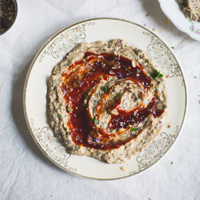
Ingredients
- 1/3 cup – olive oil (extra virgin)
- 3 cups – black chickpeas
- 1/4 tsp – chilli powder
- 1 tbsp – thick tahini
- 1/2 tsp – salt
- 1 lime zest or 2 limes juice
- 1 cup of chickpea water
For the sweet, sour sauce of saffron and barberry
- 4 tbsp – water
- 2 tbsp – dry barberry
- 2 tbsp – brown sugar
- A pinch of saffron
For the toppings
- Some dry mallow
- Parsley, finely chopped
- Walnuts, finely chopped
Directions
- The first step is to soak the black chickpeas for at least 8 hours before you start the procedure. Following which drain them properly. Then cook the chickpeas in water and wait for them to become soft.Then keep them aside and let them cool.
- In the meantime, you can prepare barberry sauce.Take a small-sized saucepan and add saffron, sugar, water, and barberries into it. Let it all boil on medium heat. Once the sugar melts, it’s time to blend all the barberries with the help of your hand blender. Then set it aside.
- Now you can use a blender or food processor to create a mixture of black chickpeas along with the cooking water, salt, chili powder, lime juice or zest, and tahini. This is to prepare the hummus, so keep blending until you achieve the desired smoothness and thickness.
- After that, add olive oil to the hummus and blend again.
- At this point, you can choose to mix barberry sauce into the hummus or serve it separately on top of it. Finish it off by adding the chopped parsley, walnuts, and dry mallow.
Lebanese Fig and Freekeh Salad
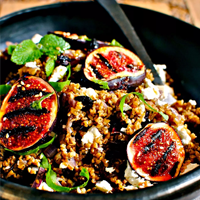
Ingredients
- 1 tbsp of sesame seeds, toasted
- 2 tbsp of dried barberries
- 2 black figs, sliced
- 4 tbsp of feta or goat cheese
- 1 tbsp of olive oil
- 1 tsp of dried mint
- 1 tbsp of parsley, chopped
- 1 tbsp of mint, chopped
- 1 coarsely chopped red onion
- 1/2 tsp of spice mix
- 3/4 cup of sifted freekeh
- Sorrel or rocket
- Lemon squeeze
Directions
- Heat oil on medium flame before adding salt and onion. Cook this on a saucepan until the onion starts to smell sweet.
- Then bring in the spice mix and stir the whole thing. Now it’s time to add water and freekeh. Bring this to a boil before simmering it for at least 10 minutes. During this time, the water will get absorbed, which will make the freekeh tender. Once this happens, you know it’s time to turn the heat off.
- On the side, use medium flame to heat a pan for fig slices. Cook them for not more than two minutes on both the sides. Then set them aside.
- Then you can add dried barberries, parsley and mint to the freekeh and stir the blend. It’s better to fluff it with the fork.Bring in some cheese and seasoning too.
- You can divide this salad into two bowls before topping each one with sesame seeds, fig slices, and remaining cheese. Drizzle the olive oil on top and serve with sour leaves or lemon squeeze.
Barberry Chicken Rice (Zereshk Polow)
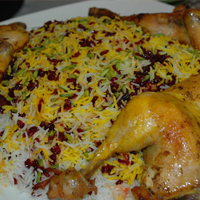
Ingredients
- 1 tsp of sugar
- 4 tbsp of butter
- 3 tbsp of plain yogurt
- 4 tbsp of milk
- 3 handfuls of rice, preferably basmati rice
- 500 g of chicken breasts or thighs, cut into large pieces
- 1 tsp of turmeric
- 50g of dried barberries
- 3 red onions, finely sliced
- A pinch of good saffron
- Some rock salt
Directions
- Wash the rice thoroughly before boiling it. Cook it on low flame until all the water gets absorbed to soften the rice. Then you can place the rice in a medium-sized bowl.
- Before cooking the barberries, soak them in water for not more than 10 minutes. Then add them with butter and sugar in a cooking pan. Stir the barberries well to encourage the puffing up process. It’s important to keep moving them on the pan as they tend to burn easily.
- Then take a small-sized bowl to bring together saffron and milk. Stir the solution and let it rest. Once it turns yellow, add yogurt and blend it thoroughly.
- Now it’s time to cook the onions with butter.Let the onions fry on a large-sized pan until they become bronze in color.Following which place them in another bowl.
- To prepare the chicken, add some turmeric to it and keep it aside in a different bowl. Then use the same onion pan to gently cook the chicken. Once it turns brown on both the sides, add water and let it simmer without the lid for at least 15-20 minutes. At the end of which transfer the chicken and its liquid with the remaining bits in two separate bowls.
- Finally, it’s time to do the layering. In the same cooking pan, first add some butter to cover the sides and bottom. The rice goes first soon followed by the chicken on top. Then another rice layer with barberries. Next come the onions with the saffron yogurt milk. And the last layer is the juicy chicken liquid that you placed in a separate bowl after cooking the chicken. Then sprinkle some rock salt on top.
- Place this in your preheated oven. Set it at 300 degrees Fahrenheit for half an hour. Keep the lid of the pot on so that all the flavors blend together.
Simple Barberry Easter Cake
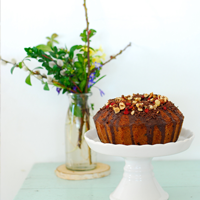
Ingredients
- 150 g of butter
- 125 g of hazelnuts
- 1/2 tsp of vanilla powder
- 100 g of sugar
- 3 eggs
- 1 tsp of baking powder or tartar cream
- 25 g of dried barberries
- 150 g of wheat flour
- Some salt
For glaze:
- 100 g of dark chocolate
Directions
- Preheat your oven to 340 degrees Fahrenheit.
- Grease as well as flour a Bundt pan measuring 6 inches.
- Then you need to toast all the hazelnuts in the oven for not more than 10 minutes. Keep them aside to cool. From this batch,collect 10 g of hazelnuts to grind them. The rest will be used later.
- Blend together vanilla, sugar, and butter until you get a light creamy paste. Then pour this into a mixer and add the eggs.
- In another bowl, bring together the baking powder or tartar cream, flour, and salt. Then add this to the batter you prepared in the mixer earlier. Blend it well before adding grounded hazelnuts along with dried barberries. Use a spatula to mix all the ingredients.
- Now is the time to pour the batter onto the pan. Make sure that the top layer is nice and smooth before you bake the sweet dish for 35-40 minutes. At the end of which remove it from the pan and transfer it to a wire rack.
- Meanwhile, prepare the toppings. You can now chop the remaining hazelnuts. Then use the potato peeler to create dark chocolate curls of a single bar of chocolate.
- Once the cake cools down on the wire rack, it’s time to place parchment paper under it.
- Melt some chocolate with hot water and spread it all on top of the cake. Make sure that some of it drizzle along the sides.
- Finally, garnish the cake with the dark chocolate curls, chopped hazelnuts, and barberries. Once the glaze becomes hard completely, it’s time to dig into the cake.
Precautions
- Bark in doses of 4 mg or more causes stupor, nosebleeds, vomiting, depression, diarrhea and kidney irritation.
- Pregnant women must avoid barberries, as in some cases, this could cause miscarriage.
- It is considered unsafe for newborns.
- Be careful before taking this herb, if you take it in a crude form, it may cause vitiligo and if you take it in a potent form it will cure Vitiligo.
- Do not use more than 7 successive days at a time.
- Diabetic patients should not combine the special medications that they take to lower blood sugar levels, with barberry.
- In infants, it can interfere with liver function and might worsen jaundice.
- Barberry is also not suggested for nursing mothers since the berberine can be passed to the infant this way.
- If you have any chronic health issues, such as liver problems or diabetes, check with your doctor before consuming any barberry supplements.
- Barberry may cause brain damage in a newborn if the mother takes this product during pregnancy.
Cure For Jaundice
The bark and the yellow wood were part of a cure for yellow jaundice, conforming to the Doctrine of Signatures’ principles. It is even today widely and effectively used as a bitter tonic given to jaundice patients several times a day.
References
- https://www.itis.gov/servlet/SingleRpt/SingleRpt?
- http://www.hear.org/pier/species/pyrus_calleryana.htm
- https://npgsweb.ars-grin.gov/gringlobal/taxon/taxonomydetail?
- https://pfaf.org/user/Plant.aspx?
- https://www.wildflower.org/plants/result.php?
- http://www.missouribotanicalgarden.org/PlantFinder/PlantFinderDetails.aspx?
- https://plants.usda.gov/core/profile?
- https://www.invasive.org/browse/subinfo.cfm?
- https://www.cabi.org/isc/datasheet/46188
- https://www.cal-ipc.org/plants/profile/pyrus-calleryana-profile/
- http://www.efloras.org/florataxon.aspx?
- https://texasinvasives.org/plant_database/detail.php?
- http://www.iucngisd.org/gisd/species.php?
- http://www.theplantlist.org/tpl1.1/record/rjp-6009
- https://en.wikipedia.org/wiki/vegetables
- https://gd.eppo.int/taxon/PYUCA
- https://www.illinoiswildflowers.info/savanna/plants/
- https://uses.plantnet-project.org/en/
- https://www.theplantlist.org/tpl1.1/record/
- https://training.ars-grin.gov/gringlobal/taxon/taxonomydetail?
- http://hort.ufl.edu/database/documents/pdf/tree_fact_sheets/
- https://www.illinoiswildflowers.info/trees/plants/callery_pear.htm
- https://www.ncbi.nlm.nih.gov/books/NBK218749/
- https://www.ncbi.nlm.nih.gov/books/NBK551014/
- https://www.ncbi.nlm.nih.gov/books/NBK551727/
- https://www.ncbi.nlm.nih.gov/books/NBK65874/
- https://www.ncbi.nlm.nih.gov/books/NBK304428/
- https://www.ncbi.nlm.nih.gov/books/NBK218759/
- https://www.ncbi.nlm.nih.gov/books/NBK556048/
- https://www.ncbi.nlm.nih.gov/books/NBK218749/
- https://www.niehs.nih.gov/health/topics/agents/vegetables/index.cfm
- https://www.sciencedirect.com/book/9780443062414/vegetable
- https://www.amazon.com/Essential-Oils-Fully-Revised-Updated/dp/1787752291
- https://www.healthbenefitstimes.com/category/herbs-and-spices/
- https://www.frontiersin.org/articles/257193
- https://www.tandfonline.com/toc/tjeo20/current
- https://www.intechopen.com/chapters/68027
- https://onlinelibrary.wiley.com/doi/full/10.1002/ptr.6854
- https://www.nature.com/articles/s41598-020-68823-4
- https://www.cancer.gov/about-cancer/treatment/cam/patient/aromatherapy-pdq
- https://www.researchgate.net/publication/254247133_
- https://link.springer.com/article/10.1365/s10337-010-1680-0
- https://fdc.nal.usda.gov/ndb/foods/show/herb
- https://www.nccih.nih.gov/health/herbsataglance
- https://portal.nifa.usda.gov/web/crisprojectpages/0092887
- https://academic.oup.com/database/article/doi/10.1093/database/bau120
- https://www.cambridge.org/core/journals/weed-science/article/herbicide-effects-of-vegetable/
- https://www.fs.fed.us/wildflowers/ethnobotany/vegetable
- https://www.karger.com/Article/Abstract/501062
- https://en.wikipedia.org/wiki/List_of_plant
- https://en.wikipedia.org/wiki/Types_of_plant_harb
- https://www.britannica.com/topic/
- https://www.planttherapy.com/
- https://academic.oup.com/plphys/article/54/4/560/
- https://www.healthbenefitstimes.com/category/oils/
- https://www.aromaweb.com/essentialoils/default.asp
- https://books.google.com/books/about/Herbs_And_Essential_Oils_Book.html?
- https://books.google.com/books/about/Herbal_herb_for_Health_Beauty.html?id=C_MX9tKpttMC
- https://books.google.com/books/about/Herbal_vegetable_for_Health_Beauty.html?id=C_MX9tKpttMC
- https://www.niehs.nih.gov/health/topics/agents/
- https://www.botanical.com/botanical/mgmh/l/
- https://www.nccih.nih.gov/health/atoz
- https://www.inaturalist.org/taxa
- https://clinicaltrials.gov/ct2/show/NCT02764567
- https://fda.report/Company/Young-Living-Essential-Oils-Lc
- http://www.fao.org/3/ad420e/ad420e.pdf
- https://www.healthywa.wa.gov.au/Articles/A_E/
- https://www.niehs.nih.gov/health/topics/agents/
- https://www.consumerreports.org/health-product-recalls/
- https://www.itis.gov/servlet/SingleRpt/SingleRpt?search_topic=TSN&search_value=18837#nullhttps://davesgarden.com/guides/pf/go/60189/https://npgsweb.ars-grin.gov/gringlobal/taxonomydetail.aspx?id=6992https://pfaf.org/user/plant.aspx?LatinName=Berberis+vulgarishttp://www.floracatalana.net/berberis-vulgaris-lhttps://botanical.com/botanical/mgmh/b/barcom12.htmlhttps://plants.usda.gov/core/profile?symbol=BEVUhttp://www.theplantlist.org/tpl1.1/record/kew-2674612https://en.wikipedia.org/wiki/Berberis_vulgarishttps://www.fs.fed.us/database/feis/plants/shrub/bervul/all.htmlhttps://www.cabi.org/isc/datasheet/8810