
Pancreas – Anatomy, Nerve Supply, Functions

Patient Tools

Read, save, and share this guide

Use these quick tools to make this medical article easier to read, print, save, or share with a family member.

Patient Mode

Understand this article easily

Switch between simple English and easy Bangla patient notes. This is for education and does not replace a doctor consultation.

Pancreas is an extended, accessory digestive gland that is found retroperitoneally, crossing the bodies of the L1 and L2 vertebra on the posterior abdominal wall. The pancreas lies transversely in the upper abdomen between the duodenum on the right and the spleen on the left....

For severe symptoms, danger signs, pregnancy, child illness, or sudden worsening, seek urgent medical care.

বাংলা রোগী নোট এখনো যোগ করা হয়নি। পোস্ট এডিটরে “RX Bangla Patient Mode” বক্স থেকে সহজ বাংলা সারাংশ যোগ করুন।

এই তথ্য শিক্ষা ও সচেতনতার জন্য। এটি ডাক্তারি পরীক্ষা, রোগ নির্ণয় বা প্রেসক্রিপশনের বিকল্প নয়।

Article Summary

Pancreas is an extended, accessory digestive gland that is found retroperitoneally, crossing the bodies of the L1 and L2 vertebra on the posterior abdominal wall. The pancreas lies transversely in the upper abdomen between the duodenum on the right and the spleen on the left. It is divided into the head, neck, body, and tail. The head lies on the inferior vena cava and the...

Key Takeaways

  • This article explains Structure and Function of Pancreas in simple medical language.
  • This article explains Blood Supply of Pancreas in simple medical language.
  • This article explains Nerves of Pancreas in simple medical language.
  • This article explains Function of Pancreas in simple medical language.
Educational health guideWritten for patient understanding and clinical awareness.
Reviewed content workflowUse writer and reviewer profiles for stronger trust.
Emergency safety firstUrgent warning signs are highlighted below.

Seek urgent medical care if you notice

These warning signs are general safety guidance. Local emergency numbers and clinical judgment should always come first.

  • Severe symptoms, breathing difficulty, fainting, confusion, or rapidly worsening illness.
  • New weakness, severe pain, high fever, or symptoms after a serious injury.
  • Any symptom that feels urgent, unusual, or unsafe for the patient.
1

Emergency now

Use emergency care for severe, sudden, rapidly worsening, or life-threatening symptoms.

2

See a doctor

Book a professional medical evaluation if symptoms persist, worsen, recur often, affect daily activities, or occur in a high-risk patient.

3

Learn safely

Use this article to understand possible causes, tests, treatment options, prevention, and questions to ask your clinician.

Before reading

RX Patient Tools

Use these quick guides before reading the article, or return to them when you need help preparing questions for a doctor.

Start here Choose the right pathway for symptoms, reports, medicines, or urgent warning signs. Disease article roadmap Read this topic step by step: meaning, symptoms, warning signs, diagnosis, treatment, prevention, and follow-up. Treatment planner Prepare questions about treatment choices, benefits, risks, side effects, and follow-up. Family & caregiver guide Organize symptoms, reports, medicines, questions, and follow-up safely. Nutrition & diet guide Prepare food, hydration, supplement, and medicine-timing questions safely. Prevention guide Organize risk factors, protective habits, screening, and warning signs. Recovery guide Prepare a safe plan for activity, rehabilitation, warning signs, and follow-up.

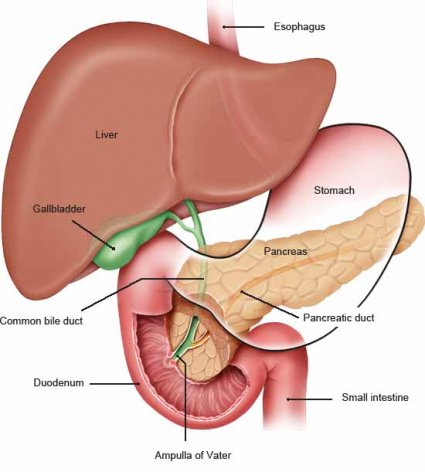
Pancreas is an extended, accessory digestive gland that is found retroperitoneally, crossing the bodies of the L1 and L2 vertebra on the posterior abdominal wall. The pancreas lies transversely in the upper abdomen between the duodenum on the right and the spleen on the left. It is divided into the head, neck, body, and tail. The head lies on the inferior vena cava and the renal vein and is surrounded by the C loop of the duodenum. The tail of the pancreas extends up to splenic hilum. The pancreas produces an exocrine secretion (pancreatic juice from the acinar cells) which then enters the duodenum through the main and accessory pancreatic ducts and endocrine secretions (glucagon and insulin from the pancreatic islets of Langerhans) that enter the blood.
Pancreas - Anatomy, Nerve Supply, Functions

Structure and Function of Pancreas

The pancreas is divided into 4 parts: head, neck, body, and tail.

  • The head of the pancreas is the enlarged part of the gland that is surrounded by the C-shaped curve of the duodenum. On its way to the descending part of the duodenum, the bile duct lies in a groove on the posterosuperior surface of the head or is embedded in its substance.
  • The body of the pancreas continues from the neck passes over the aorta and L2 vertebra. The anterior surface of the body of the pancreas is covered with peritoneum. The posterior surface of the body is devoid of peritoneum and is in contact with the aorta, the superior mesenteric artery (SMA), the left suprarenal gland, left kidney, and renal vessels.
  • The neck of the pancreas is short. The tail of the pancreas lies anterior to the left kidney, where it is closely related to the splenic hilum and the left colic flexure. The main pancreatic duct carrying the pancreatic secretions joins with bile duct to form hepatopancreatic ampulla, which opens into the descending part of the duodenum.
  • The hepatopancreatic sphincter of Oddi around the hepatopancreatic ampulla is a smooth muscle sphincter that controls the flow of bile and pancreatic juice into the ampulla and inhibits reflux of duodenal substances into the ampulla.

Blood Supply of Pancreas

Arterial Supply

Branches of the splenic artery (a branch of the celiac trunk), superior mesenteric artery (SMA), and the common hepatic artery provide blood supply to the pancreas .

  • Pancreatic head – The gastroduodenal artery (a branch of the common hepatic artery) supplies the head and the uncinate process of the pancreas in the form of the pancreaticoduodenal artery (PDA). Part of the inferior portion of the head is supplied by the inferior PDA which arises from the SMA.
  • Body and the tail – The splenic artery and its branches supply these.

Venous Supply

  • Pancreatic head – The head drains into the superior mesenteric vein (SMV).
  • Body and the neck – The splenic vein drains these.

The SMV and splenic vein merge to form the portal vein.

Nerves of Pancreas

The pancreas has a complex network of

  • Parasympathetic,
  • Sympathetic, and
  • Sensory innervations . It also has an intrinsic nerve plexus. 
  • Sympathetic and parasympathetic fibers are dispersed to pancreatic acinar cells.
  • The parasympathetic fibers arise from the posterior vagal trunk and are secretomotor, but the secretions from the pancreas are predominantly mediated by cholecystokinin and secretin, which are hormones produced by the epithelial cells of the duodenum and proximal intestinal mucosa regulated by acidic compounds from the stomach.
  • Sympathetic innervation is via the T6-T10 thoracic splanchnic nerves and the celiac plexus.

Function of Pancreas

Pancreatic Hormones and Their Function

Insulin

  • Source – Beta cells of islets of the pancreas.
  • SynthesisInsulin is a peptide hormone. The insulin mRNA is translated as a single-chain precursor called preproinsulin, and removal of its signal peptide during insertion into the endoplasmic reticulum generates proinsulin. Within the endoplasmic reticulum, proinsulin is exposed to several specific endopeptidases, which excise the C peptide (one of three domains of proinsulin), thereby generating the mature form of insulin.
  • Transportinsulin circulates entirely in the unbound form (T1/2 = 6 min).
  • Main Target cells – hepatic, muscle and adipocyte cells (i.e., cells specialized for energy storage).
  • Mechanism of actionInsulin binds to a specific receptor tyrosine kinase on the plasma membrane and increases its activity to phosphorylate numerous regulatory enzymes and other protein substrates.
  • Regulation of its secretion – Plasma glucose level is the main regulator of insulin secretion. The change in the concentration of plasma glucose that occurs in response to feeding or fasting is the main determinant of insulin secretion. Modest increases in plasma glucose level provoke a marked increase in plasma insulin concentration. Glucose is taken up by beta cells via glucose transporters (GLUT2). Increased plasma amino acid and free fatty acid concentrations induce insulin secretion as well. Glucagon is also known to be a strong insulin secretagogue.
  • Physiological functions – Insulin plays an important role to keep plasma glucose value within a relatively narrow range throughout the day (glucose homeostasis). Insulin’s main actions are (1) In the liver, insulin promotes glycolysis and storage of glucose as glycogen (glycogenesis), as well as the conversion of glucose to triglycerides, (2) In muscle, insulin promotes the uptake of glucose and its storage as glycogen, and (3) in adipose tissue, insulin promotes the uptake of glucose and its conversion to triglycerides for storage.

Amylin (insulin is low or not working well. সহজ বাংলা: রক্তে চিনি বেশি থাকার রোগ।" data-rx-term="diabetes" data-rx-definition="Diabetes is a condition where blood sugar stays too high because insulin is low or not working well. সহজ বাংলা: রক্তে চিনি বেশি থাকার রোগ।">diabetes-associated peptide)

  • Source – Beta cells of islets of the pancreas. It is co-secreted with insulin in response to caloric intake (feeding state).
  • Target cells – Alpha cells of islets of pancreas and hypothalamus.
  • Physiological functions – it suppresses glucagon secretion from the alpha cells of the islets in the pancreas via paracrine interaction between beta cells and alpha cells. Amylin also slows gastric emptying which delays the absorption of glucose from the small intestine into the circulation. Also, it stimulates the satiety center of the brain to limit food consumption.

Glucagon

  • Source – Alpha cells of islets of the pancreas.
  • Synthesis – The initial gene product is the mRNA encoding preproglucagon. A peptidase removes the signal sequence of preproglucagon during the translation of the mRNA in the rough endoplasmic reticulum to yield proglucagon. Proteases in the alpha cells subsequently cleave the proglucagon into the mature glucagon molecule.
  • Target cells – Hepatic cells.
  • Mechanism of action – glucagon binds to a receptor that activates the heterotrimeric G protein Gas, which stimulates membrane-bound adenylyl cyclase. The cAMP formed by adenylyl cyclase, in turn, activates PKA, which phosphorylates numerous regulatory enzymes and other protein substrates.
    Regulation of its secretion – The amino acids released by digestion of a protein meal appear to be the main determinant of glucagon secretion.
  • Physiological functions – Glucagon acts exclusively on the liver to antagonize insulin effects on hepatocytes. It enhances glycogenolysis and gluconeogenesis. It also promotes oxidation of fat, which can lead to the formation of ketone bodies.

Somatostatin

  • Source – Delta cells of the islets of the pancreas, hypothalamus and D cells of gastric glands.
  • Target cells – Beta cells of islets of the pancreas, somatotroph cells in the anterior pituitary gland and the G cells of the gastric glands.
  • Mechanism of action – Somatostatin binds to a receptor that activates the heterotrimeric inhibitory G protein, which inhibits membrane-bound adenylyl cyclase and cAMP formation.
  • Regulation of its secretion – Glucagon stimulates somatostatin secretion via paracrine interaction between alpha cells and delta cells of the islets of the pancreas.
  • Physiological functions – Somatostatin inhibits the secretion of multiple hormones, including growth hormone, insulin, glucagon, gastrin, vasoactive intestinal peptide (VIP), and thyroid-stimulating hormone.

Ghrelin

  • Source – Epsilon cells of the islets of the pancreas, endocrine cells in the stomach and hypothalamus.
  • Target cells – Beta cells of the islets of the pancreas and somatotroph cells in the anterior pituitary gland.
  • Physiological functions – ghrelin inhibits the secretion of insulin from Beta cells of the islets of the pancreas via paracrine interaction between delta cells and beta cells of the islets of the pancreas. It also stimulates appetite and growth hormone secretion.

Pancreatic Polypeptide (PP)

  • Pancreatic polypeptide is secreted from upsilon (F) cells of the islets of the pancreas. Dietary intake of nutrients alters the secretion of the pancreatic polypeptide. Its function is not decidedly understood yet.
  • Paracrine Interaction Between Pancreatic Endocrine Cells
  • Insulin secreted by beta cells acts as a prime hormone of glucose homeostasis. Insulin and amylin inhibit glucagon secretion by alpha cells. Whereas glucagon activates insulin and somatostatin secretion, somatostatin secreted by delta cells and ghrelin by epsilon cells inhibit insulin secretion.


References

Doctor visit helper

Prepare before seeing a doctor

A simple rural-patient checklist to help you explain symptoms clearly, ask better questions, and avoid unsafe self-treatment.

Safety note: This is not a prescription or diagnosis. For severe symptoms, pregnancy danger signs, children with serious illness, chest pain, breathing difficulty, stroke-like weakness, or major injury, seek urgent care.

Which doctor may help?

Start with a registered doctor or the nearest qualified health center.

What to tell the doctor

  • Write when the problem started and how it changed.
  • Bring old prescriptions, investigation reports, and current medicines.
  • Write allergies, pregnancy status, diabetes, kidney/liver disease, and major past illnesses.
  • Bring one family member if the patient is weak, elderly, confused, or a child.

Questions to ask

  • What is the most likely cause of my symptoms?
  • Which danger signs mean I should go to hospital quickly?
  • Which tests are necessary now, and which can wait?
  • How should I take medicines safely and what side effects should I watch for?
  • When should I come for follow-up?

Tests to discuss

  • Vital signs: temperature, pulse, blood pressure, oxygen saturation
  • Basic physical examination by a clinician
  • CBC, urine test, blood sugar, or imaging only when clinically needed

Avoid these mistakes

  • Do not use antibiotics, steroid tablets/injections, or strong painkillers without proper medical advice.
  • Do not hide pregnancy, kidney disease, ulcer, allergy, or blood thinner use.
  • Do not delay emergency care when danger signs are present.

Medicine safety and first-aid guide

This section is for patient education only. It does not replace a doctor, pharmacist, or emergency care.

Safe first steps

  • Rest, drink safe water, and observe symptoms carefully.
  • Keep a written note of symptoms, duration, temperature, medicines already taken, and allergy history.
  • Seek medical care quickly if symptoms are severe, worsening, or unusual for the patient.

OTC medicine safety

  • For mild pain or fever, ask a registered pharmacist or doctor before using common over-the-counter pain/fever medicines.
  • Do not combine multiple pain medicines without advice, especially if you have kidney disease, liver disease, stomach ulcer, asthma, pregnancy, or take blood thinners.
  • Do not give adult medicines to children unless a qualified clinician advises it.

Avoid these mistakes

  • Do not start antibiotics without a proper medical decision.
  • Do not use steroid tablets or injections casually for quick relief.
  • Do not delay emergency care because of home remedies.

Get urgent help if

  • Severe symptoms, confusion, fainting, breathing difficulty, chest pain, severe dehydration, or sudden weakness need urgent medical care.
Medicine names, dose, and timing must be decided by a qualified clinician or pharmacist after checking age, pregnancy, allergy, other diseases, and current medicines.

For rural patients and family caregivers

Patient health record and symptom diary

Write your symptoms, medicines already taken, test results, and questions before visiting a doctor. This note stays on your device unless you print or copy it.

Doctor to discuss: Doctor / qualified healthcare provider
Tests to discuss with doctor
  • Basic vital signs: temperature, pulse, blood pressure, oxygen level if needed
  • Relevant blood, urine, imaging, or specialist tests only after clinical assessment
Questions to ask
  • What is the most likely cause of my symptoms?
  • Which warning signs mean I should go to emergency care?
  • Which tests are really needed now?
  • Which medicines are safe for my age, pregnancy status, allergy, kidney/liver/stomach condition, and current medicines?

Emergency warning signs such as chest pain, severe breathing difficulty, sudden weakness, confusion, severe dehydration, major injury, or loss of bladder/bowel control need urgent medical care. Do not wait for online information.

Safe pathway to proper treatment

Care roadmap for: Pancreas – Anatomy, Nerve Supply, Functions

Use this simple roadmap to understand the next safe steps. It is educational and does not replace examination by a doctor.

Go to emergency care if you notice:
  • Severe or rapidly worsening symptoms
  • Breathing difficulty, chest pain, fainting, confusion, severe weakness, major injury, or severe dehydration
Doctor / service to discuss: Qualified healthcare provider; specialist depends on symptoms and examination.
  1. Step 1

    Check danger signs first

    If danger signs are present, seek emergency care and do not wait for online information.

  2. Step 2

    Record the symptom story

    Write when symptoms started, severity, medicines already taken, allergies, pregnancy status, and test results.

  3. Step 3

    Visit a qualified clinician

    A doctor, nurse, or qualified healthcare provider can examine you and decide which tests or treatment are needed.

  4. Step 4

    Do only useful tests

    Do tests after clinical assessment. Avoid unnecessary tests, random antibiotics, or repeated medicines without diagnosis.

  5. Step 5

    Follow up and return early if worse

    If symptoms worsen, new warning signs appear, or treatment is not helping, return for review quickly.

Rural patient practical tips
  • Take a written symptom diary and all previous prescriptions/test reports.
  • Do not hide medicines already taken, even herbal or over-the-counter medicines.
  • Ask which warning signs mean urgent referral to hospital.

This roadmap is for education. A real diagnosis and treatment plan requires history, examination, and clinical judgment.

RX Patient Help

Ask a health question safely

Write your symptom story. A health professional or site editor can review it before any answer is prepared. This box is not for emergency care.

Emergency first: Severe chest pain, breathing trouble, unconsciousness, stroke signs, severe injury, heavy bleeding, or rapidly worsening symptoms need urgent local medical care now.

Frequently Asked Questions

Is this article a replacement for a doctor?

No. It is educational content only. Patients should consult a qualified clinician for diagnosis and treatment.

When should I seek urgent care?

Seek urgent care for severe symptoms, rapidly worsening condition, breathing difficulty, severe pain, neurological changes, or any emergency warning sign.

References

Add references, clinical guidelines, textbooks, journal articles, or trusted medical sources here. You can edit this area from the RX Article Professional Blocks panel.