
When recovering from an addiction, finding ways to take care of yourself is important. Relaxation, in particular, is a powerful tool in the realm of self-care that can be used to promote healing and tranquility. This is highly useful during and after addiction treatment because by taking care of your overall well-being, recovery can often be facilitated more easily.
Promoting relaxation and ease can even help fight symptoms of anxiety and depression that are common in people suffering from a substance use disorder (SUD). One way to promote relaxation and healing is through the use of essential oils for addiction recovery. Utilizing principles of aromatherapy, you may find that these oils are a worthwhile addition to your addiction treatment plan.
What is Aromatherapy?
Aromatherapy is a form of alternative medicine that uses essential oils to improve physical, emotional, and mental health. Using essential oils to promote positive changes to an individual’s health is a common practice in aromatherapy. In fact, many essential oils have been used in Eastern medicine for centuries to help people struggling with pain, mood disorders, and physical ailments. This carries over to why it is so beneficial for those with a SUD to use essential oils for addiction recovery.
While many people use essential oils to fragrance their homes or are used in perfumes, aromatherapy is the use of essential oils for therapeutic purposes by inhaling or safely applying them to different areas of the body. The essential oils used in aromatherapy, which are extracted from plants and flowers, interact with the olfactory system and the limbic system in the brain when these oils are inhaled or absorbed through the skin. This interaction can help to improve mood, relieve stress, and promote relaxation.
What are Essential Oils?
If you’re wondering what essential oils are, these oils are naturally occurring substances found in seeds, bark, stems, roots, flowers, and other parts of plants. They sometimes resemble fats or waxes but contain the essential chemical compounds that give the plants they come from their distinctive aromas. Popular essential oils used for aromatherapy include:
- Sage
- Clove
- Ginger
- Lavender
- Rosemary
- Eucalyptus
- Eucalyptus
- Chamomile
- Cedarwood
- Ylang Ylang
- Peppermint
- Sandalwood
- Citrus oils such as grapefruit, orange, lemon, and lime
The essential oils available for addiction recovery aren’t limited to the ones listed above as there are essential oils for almost every type of plant. However, the use of essential oils is based on the theory that essential oils can be used to enhance physical and mental health in humans. Therefore, the oils chosen for aromatherapy must display a healing property. For example, lavender oil is known to promote healing for skin irritations and aids with restful sleep when taken properly.
The Benefits of Aromatherapy
Aromatherapy has many benefits for individuals who are recovering from an SUD. While the essential oils used in aromatherapy often have strong scents that can provide a refreshing sensory experience during recovery, this isn’t all they can do. As previously mentioned, these essential oils can also help to relieve stress and promote relaxation, which is important for a successful recovery from substance abuse and addiction.
Other benefits of aromatherapy and essential oils for addiction recovery include the following:
- Enhanced mood
- Nausea alleviation
- Improved quality of sleep
- Bolstered immune system
- Reduced feelings of depression
- Decreased feelings of stress and anxiety
How Useful are Essential Oils for Addiction Recovery?
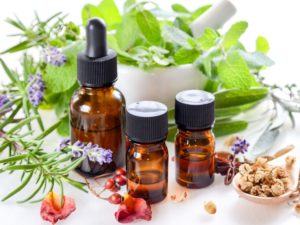
The use of essential oils for addiction recovery is similar to how essential oils are incorporated into other types of treatment. For example, essential oils that are known for their physical benefits can be used in physical therapy routines as a treatment option for certain types of pain or injury. Rather than using essential oils to promote physical healing, oils are used to aid a scientifically backed and widely used type of therapy.
Addicts often suffer from high levels of stress, anxiety, and depression. Essential oils can help to reduce these symptoms and make the recovery process easier. Essential oils also have anti-inflammatory and antiseptic properties that can help to improve the health of the addict’s body. In addition, essential oils can be used to reduce cravings for addictive substances. Some essential oils, such as peppermint oil, can even counteract the unpleasant effects of drug withdrawal.
Can You Use Essential Oils for Alcoholism Treatment?
Although essential oils have been around for centuries, there hasn’t yet been enough research to determine the benefits of essential oil therapy in helping people recover from specific addictions such as alcoholism. However, it’s believed that essential oil inhalation may benefit alcoholics by reducing stress and anxiety, two common triggers for relapse.
Alcoholism is a very dangerous addiction, both physiologically and psychologically. When someone is trying to overcome this type of addiction, it can take a toll on their overall well-being. Using essential oils during alcohol addiction treatment can help to improve the individual’s physical and emotional health, which can lead to a successful recovery.
Some essential oils that may be helpful for alcoholics in recovery include lavender oil, rose oil, and chamomile oil. Lavender oil is known for its relaxing and calming properties, while rose oil is uplifting oil and antidepressant. Chamomile oil is anti-inflammatory and can help to soothe the mind and body. Overall, the use of essential oils for addiction recovery is based on how they may help relieve symptoms, but should not be considered a cure-all.
Types Of Essential Oils Commonly Used in Aromatherapy
There are many essential oils that can be helpful for those recovering from addiction. Each essential oil has unique properties that can benefit the individual in different ways. Some essential oils that are known to be beneficial for addiction recovery include lavender oil, rosemary oil, and grapefruit oil.
It’s important to find the products that work best for you before using essential oils for addiction recovery. In addition to using essential oils, it’s also important to get plenty of exercise, eat a balanced diet, and sleep the recommended number of hours each night for your age group.
The essential oils used for addiction recovery can include the following:
Lavender
A lavender essential oil can be used to treat anxiety and stress. It also helps with insomnia which can be commonly experienced during withdrawal or as a result of frequent drug use. Overall, aromatherapy that utilizes this essential oil promotes feelings of calmness to combat restlessness due to its ability to lower cortisol levels. While going through the many challenges associated with recovery, lavender oil can help relieve stress along the way.
Rosemary
Rosemary oil is primarily used to treat fatigue and improve memory. Studies have shown that rosemary oil is beneficial for treating body pain, stress, and anxiety. In some use cases, this oil has even been utilized to help abate symptoms of opiate withdrawal.
Bergamot
Bergamot essential oil has many different uses. It is used for anxiety, depression, and reducing stress levels. This essential oil is hailed as a mood-improving and energizing oil. However, it has been shown to increase an individual’s sensitivity to the sun and should be used carefully.
Peppermint
Nausea and vomiting are very common symptoms of many SUDs and both the withdrawal and detox processes. Peppermint has been used to provide relief to patients in addiction recovery by deterring uncomfortable feelings of nausea. It has also been observed to aid with migraines and headaches when applied safely to the temples.
Citrus Oils
Citrus essential oils are known for their uplifting and refreshing properties. They are also helpful in reducing anxiety and stress levels and are considered to be mood-enhancers. This is believed to come from their ability to aid with serotonin production.
How to Safely Use Essential Oils
If you are coming out of addiction recovery, aromatherapy is an easy way to help keep unhealthy cravings under control and ease symptoms of depression. Aromatherapy can help addicts fall asleep easier and feel better throughout the day. However, while essential oils used in aromatherapy have different benefits it’s important to use them safely. This is especially true when using essential oils for addiction recovery. Some common ways people use these oils include:
- Spraying linens
- Diffusing into the air through a mister
- Steaming by adding oil to a boiling pot
- Applying onto the skin through a carrier oil
It’s important to note that essential oils are concentrates. This means that they are very concentrated and must be diluted before being used. It’s also important to make sure that these oils are never taken internally without explicit confirmation that they can be consumed. These oils should also never be placed directly on the skin without a carrier oil, or an oil that is safe to use for dilution and mixing with essential oils.
How to Choose Essential Oils When Shopping
Oils can vary in quality and effectiveness based on many different factors. It’s important to be careful when choosing essential oils for addiction recovery especially. Some things to keep in mind when choosing essential oils include the following:
- Pick a brand you trust: If you know a source is reputable, it’s recommended you buy it from them versus a brand you aren’t familiar with.
- Read labels: Labels will tell you a lot about a product. A good oil will include a label with identifying information, the source, ingredients, the planting process, and the extraction method used to produce the oil from the plant.
- Determine if the oil is 100% essential oil: Many times, people confuse fragrance oils with essential oils. These are synthetic oils that are used in many scented products. These can be highly damaging for people who have asthma or if used on the skin.
- Dark containers only: A quality essential oil will always come in a dark blue or dark brown glass container. These darker colored glasses protect the oils from light and heat which can affect the quality of the oils. It’s recommended to never buy these oils in a plastic container. Due to the strength of these oils, they will likely break down the plastic.
Keeping these factors in mind, it’ll be easier to find a quality oil that helps your health versus harms it. If you’re deciding between different brands of oils, sometimes the price can also factor into which one you should buy. In many cases, you may end up paying for quality. Cheaper oil could seem like a deal, but it may be too good to be true. In these cases, it may be safer to go with the more expensive version when buying essential oils for addiction recovery.
Recovering From Addiction with New Directions
If you’re experiencing an addiction to drugs or alcohol, the first step is acknowledging your dependence on these substances. Coming to terms with an addiction can be difficult, but there is help available.
Here at New Directions for Women, we work with individuals who require the specialized care and treatment required to take their life back from drugs and alcohol. To find a treatment plan that is right for you, contact us today.
References
- https://www.niaaa.nih.gov/publications/brochures-and-fact-sheets/women-and-alcohol
- https://www.ncbi.nlm.nih.gov/pmc/articles/PMC3612440/
- https://pubmed.ncbi.nlm.nih.gov/17291597/
- https://pubmed.ncbi.nlm.nih.gov/27333231/
- https://www.cdc.gov/reproductivehealth/features/maternal-depression/index.html
- https://www.nami.org/mhstats
- https://www.niaaa.nih.gov/publications/brochures-and-fact-sheets/understanding-alcohol-use-disorder
- https://www.ncbi.nlm.nih.gov/books/NBK549783/
- https://pubmed.ncbi.nlm.nih.gov/22631030/
- https://www.ncbi.nlm.nih.gov/books/NBK424849/
- https://www.ncbi.nlm.nih.gov/books/NBK232966/
- https://www.ncbi.nlm.nih.gov/books/NBK570642/
- https://www.ncbi.nlm.nih.gov/books/NBK232975/
- https://www.ncbi.nlm.nih.gov/books/NBK424848/
- https://www.ncbi.nlm.nih.gov/books/NBK424857/
- https://www.fda.gov/media/128443/download
- https://www.fda.gov/media/116739/download
- https://www.fda.gov/media/116739/download
- https://www.nimh.nih.gov/health/topics/substance-use-and-mental-health
- https://newsinhealth.nih.gov/2015/10/biology-addiction
- https://grants.nih.gov/grants/guide/pa-files/PA-95-089.html
- https://www.fda.gov/drugs/information-drug-class/information-about-medication-assisted-treatment-mat
- https://nida.nih.gov/
- https://www.nih.gov/about-nih/what-we-do/nih-almanac/national-institute-drug-abuse-nida
- https://nida.nih.gov/publications/drugs-brains-behavior-science-addiction/drug-misuse-addiction
- https://www.newdirectionsforwomen.org/category/addiction-information/
- https://nida.nih.gov/research-topics/treatment
- https://medlineplus.gov/druguseandaddiction.html
- https://global.oup.com/academic/product/addiction-medicine-9780198714750
- https://www.ox.ac.uk/about/organisation/oxford-university-press
- https://www.cambridge.org/core/journals/journal-of-mental-science/article/
- https://www.science.org/doi/10.1126/science.263.5152.1456
- https://en.wikipedia.org/wiki/Addiction
- https://en.wikipedia.org/wiki/Substance_abuse
- https://en.wikipedia.org/wiki/Substance_dependence
- https://en.wikipedia.org/wiki/Prescription_drug_addiction
- https://www.sciencedirect.com/topics/social-sciences/drug-abuse
- https://www.apa.org/pubs/journals/adb
- https://scholar.google.com/
- https://books.google.com/books/about/The_American_Psychiatric_Publishing_Text.html?
- https://books.google.com/books?id=Sv89AAAAYAAJ&printsec=frontcover&source=gbs_book_other_versions_r&cad=3
- https://onlinelibrary.wiley.com/journal/13600443
- https://onlinelibrary.wiley.com/journal/
- https://link.springer.com/book/10.1007/978-1-4614-3375-0
- https://www.cambridge.org/core/journals/behavioral-and-brain-sciences/article/
- https://illnesshacker.com/
- https://www.frontiersin.org/articles/10.3389/fpsyg.2019.01817/full
- https://www.sciencedirect.com/journal/drug-and-alcohol-dependence-reports/
- https://www.tandfonline.com/doi/abs/10.1080/09540100802098331
- https://clinicalinfo.hiv.gov/en/resources
- https://www.mdpi.com/journal/ijerph
- https://academic.oup.com/cercor/advance-article/doi/10.1093/cercor/bhac281/6674346
- https://endinglines.com/

