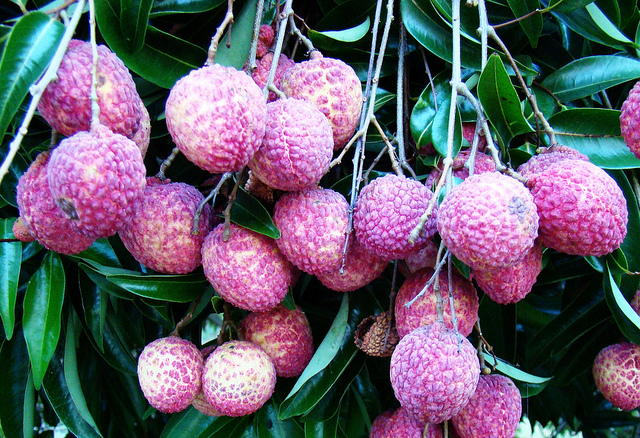
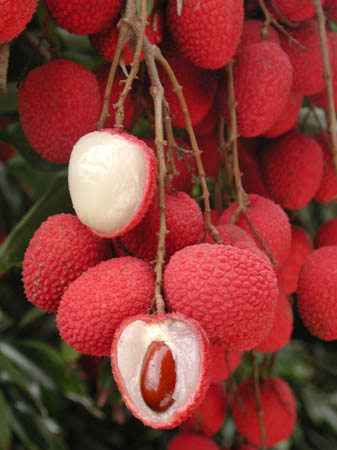
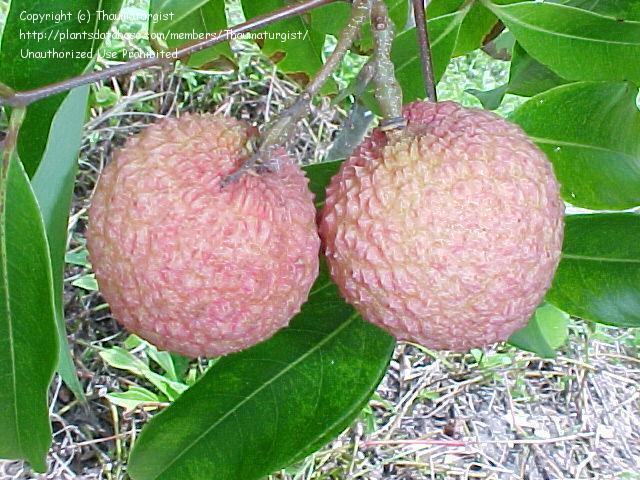
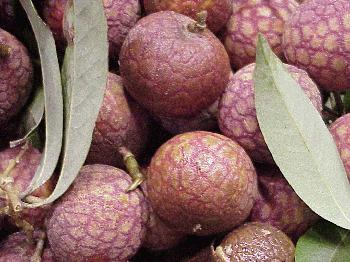
Lychee is also called Chinese strawberry because it is originated from China and also looks like a strawberry. The seed is ellipsoid to oblong and dark brown. The fruit has thin, rough, and leathery skin. The fruit gets mature in between 80-112 days that depending on location, climate, and cultivar. The plant grows well in warm subtropical to tropical climates. Emperor fruit, Mauritius, Sweet Heart, Brewster, Haak Yip, and Bengal are the varieties of Lychee.
Lychee Quick Facts
Name:
Lychee
Scientific Name:
Litchi chinensis
Origin
Lychee is native to Southern China and was introduced to the countries with subtropical or tropical climates by the past 400 years.
Lychee (taxonomic name: Litchi chinensis) is a medium-sized tree in the family of Sapindaceae. The name refers to the edible fruit which is produced by this tree. Lychee is native to Southern China. It is closely related to several other edible tropical fruits such as longan, mamoncillo, and rambutan. Litchi chinensis is also commonly called Chinese Cherry, Lichee, Leechee, Litchi, Mountain Lychee, Lychee, and Water Lychee. It is known as Litchi in Italian; Litschibaum in German; Litsi in Greek and Reishi in Japanese languages.
LYCHEE FACTS
Lychee belongs to the member of the family Sapindaceae. This plant is cultivated as a vital fruit tree in tropical and subtropical areas. The features of Lychee fruit are it possess bright color, excellent tast, and exotic aroma. Lychee is a well-known fruit in the world. Currently, it is cultivated on every continent besides Antarctica and is noted as “King of Fruits”.
Name
Lychee
Scientific Name
Litchi chinensis
Native
Lychee is native to Southern China and was introduced to the countries with subtropical or tropical climates by past 400 years.
Common/English Name
Chinese Cherry, Lichee, Leechee, Litchi, Mountain Lychee, Lychee, Water Lychee
A perennial plant, survive for 1,000 years in wild
Trunk
Short stocky
Bark
Dark greyish
Branches
Terete, lenticellate, brownish to red
Leaf
Alternate, pinnate, dark green, evergreen, glossy, Length: 3-6 inches
Flowering Season
Late December-April
Flower
Small, greenish to white to yellowish
Fruit shape & size
Aromatic, subglobose, ovoid, heart-shaped, Length: 4 cm; Wide: 2 or 5 cm
Fruit weight
10 g
Fruit color
Strawberry red, pinkish, amber; Diameter: 1.5 inch
Flesh color
Glossy, thick, succulent, translucent to white
Fruit peel
Thin, leathery, rough, yellow-pinkish or red
Flavor/aroma
Subacid, pungent
Fruit Taste
Distinct, sweet
Seed
One, hard, shiny, dark brown, ellipsoid to oblong; Length: 20 mm
Varieties/Types
Emperor fruit
Mauritiu
Sweet Heart
Brewster
Haak Yip
Bengal
Fruit Season
Late June-July
Major Nutritions (Raw)
Vitamin C (Ascorbic acid) 135.8 mg (150.89%)
Copper, Cu 0.281 mg (31.22%)
Carbohydrate 31.41 g (24.16%)
Vitamin B6 (Pyridoxine) 0.19 mg (14.62%)
Vitamin B2 (Riboflavin) 0.124 mg (9.54%)
Phosphorus, P 59 mg (8.43%)
Iron, Fe 0.59 mg (7.38%)
Vitamin B3 (Niacin) 1.146 mg (7.16%)
Potassium, K 325 mg (6.91%)
Vitamin B9 (Folate) 27 µg (6.75%)
Health Benefits
Supports digestion
Enhance immunity
Prevent cancer
Antiviral properties
Maintains blood pressure
Oligonol
Circulates blood
Calories in 1 cup (190 gm)
125 Kcal.
Traditional uses
The decoction is used as a gargle to alleviate throat ailments.
Treats orchitis and neuralgic disorders.
Provides relief from coughs, cells growth, and stomach pain.
Treat tumors, gastralgia, and gland enlargements.
Cure eruptions of smallpox and diarrhea.
Powdered seeds are useful for intestinal problems.
Provide relief from neuralgic pains.
Ground seeds soothe gastrically.
Promote bleeding, cure sore throats and prevent UV rays.
Precautions
Limited amounts for diabetic patients.
Discontinue using before two weeks of scheduled surgery.
Experience allergic reactions.
Overconsumption results in diarrhea, gastrointestinal problems, and abdominal pain.
Excessive consumption results in hypoglycemia, seizure, fever, and unconsciousness.
How to Eat
Added to fruit salads and fruit cups.
Packed with a mixture of mayonnaise and cream cheese.
Covered with whipped cream and pistachio ice cream as a dessert.
Added to the ice cream mix.
Made as sherbet.
Lychee is canned in sugar syrup.
Consumed like raisins.
Consumed fresh or raw.
Added to fruit dressings and salads.
Made into jellies, sorbet, jams, sauces, and syrups.
Found fresh, dried, or canned.
Added to the recipes, desserts, and ice cream.
Lychee is used with slices of avocado.
Lychee mixes well with banana, strawberry, mango, papaya, and coconut water.
Other Facts
The leaves consist of 2 to 4 thin leaflets.
The flowers can be green, white, or yellow.
Bees are the main pollinators of the plant.
Lychee ripens in 100-120 days.
Lychee possesses a floral aroma.
Lychee is called Chinese strawberry because looks like a strawberry.
In China, Lychee is regarded as the symbol of romance and love.
China and India are the highest manufacturers of Lychee.
The dried Lychee possesses a smoky flavor.
The rough and thin skin of Lychee is peeled before consumption.
Lychee has red to pink skin with translucent flesh.
Lychee Scientific Classification
Scientific Name: Litchi chinensis
Rank
Scientific Name & (Common Name)
Kingdom
Plantae (Plants)
Subkingdom
Tracheobionta (Vascular plants)
Superdivision
Spermatophyta (Seed plants)
Division
Magnoliophyta (Flowering plants)
Class
Magnoliopsida (Dicotyledons)
Subclass
Rosidae
Order
Sapindales
Family
Sapindaceae (Soapberry family)
Genus
Litchi Sonn. (Lychee)
Species
Litchi chinensis Sonn. (Lychee)
Synonyms
Corvinia litschi Stadtm. ex Willemet
Euphoria didyma Blanco
Euphoria litchi Juss. ex Desf.
Euphoria sinensis J.F.Gmel.
Litchi chinensis var. euspontanea H.H.Hsue
Nephelium chinense (Sonn.) Druce
Nephelium chinense (Sonn.) Druce
Nephelium chinense (Sonn.) M.R.Almeida
Nephelium didymum Craib
Nephelium dimocarpus Hiern
Nephelium dimocarpus Hiern
Nephelium duriocarpum T.Anderson ex Hiern
Nephelium duriocarpum T.Anderson ex Hiern
Nephelium litchi Cambess.
Nephelium litchi Steud.
Nephelium litchi Steud.
Scytalia chinensis Gaertn.
Scytalia litschi Roxb.
Scytalia squamosa Stokes
History
Lychee is native to Southern China and was introduced to the countries with subtropical or tropical climates in the past 400 years. China, Thailand, India, and Vietnam are the current leading producers of Lychee. Particularly, China has been cultivating for over 2300 years.
Lychee was cultivated in Southern China for about 2,000 years before 1059 AD. It was cultivation in Southern China, Vietnam, and Malaysia. Cultivation of lychee began in the region of southern China, Malaysia, and northern Vietnam. Unofficial records show that Lychee was cultivated in China as far back as 2000 BC. In 1775, it reached the West Indies which was being planted in the early 19th Century in greenhouses of England and France. It reached Florida in 1883 and Hawaii in 1873. It was brought to California from Florida in 1897. In 1914, it was first fruited in Santa Barbara. In the 1920s, the crop was about 30 million lbs. in China.
Plant
It is an evergreen tree growing to a height of 40-50 feet. The leaves are alternate, 3-6 inches long, pinnate with leaflets that occur in 2 to 4 pairs on 7-8 mm petioles. The flowers are small and greenish to white to yellowish.
The fruit is an aromatic, subglobose to ovoid or heart-shaped berry which is 4 cm long and 2 or 5 cm wide. The leathery skin is yellow-pinkish or red which is thin and rough. The fruit flesh which is aril is white or translucent with a subacid or pungent flavor.
The single seed is glossy dark brown, ellipsoid to oblong, and 20 mm long. The fruits could be eaten raw or added to recipes. They could be added to desserts, ice creams, jams, jellies, sorbets, syrups, and sauces.
Nutritional Value
The serving size of 1 cup (190 gm) provides 155.34 g of moisture, 125 calories, 1.58 g of protein, 0.84 g of total fat, 0.84 g of ash, 31.41 of carbohydrate, 2.5 g of dietary fiber, and 28.94 g of total sugars. It covers 150.89% of vitamin C, 31.22% of copper, 24.16% of carbohydrate, 14.62% of vitamin B6, 9.54% of riboflavin, 8.43% of phosphorus, 7.38% of iron, 7.16% of niacin, 6.91% of potassium, 6.75% of folate and 6.58% of total dietary fiber.
Nutritional value of Lychee, raw
Serving Size:1 Cup, 190 g
Calories 125 Kcal.Calories from Fat 7.56 Kcal.
Proximity
Amount
% DV
Water
155.34 g
N/D
Energy
125 Kcal
N/D
Energy
524 kJ
N/D
Protein
1.58 g
3.16%
Total Fat (lipid)
0.84 g
2.40%
Ash
0.84 g
N/D
Carbohydrate
31.41 g
24.16%
Total dietary Fiber
2.5 g
6.58%
Total Sugars
28.94 g
N/D
Minerals
Amount
% DV
Calcium, Ca
10 mg
1.00%
Iron, Fe
0.59 mg
7.38%
Magnesium, Mg
19 mg
4.52%
Phosphorus, P
59 mg
8.43%
Potassium, K
325 mg
6.91%
Sodium, Na
2 mg
0.13%
Zinc, Zn
0.13 mg
1.18%
Copper, Cu
0.281 mg
31.22%
Manganese, Mn
0.104 mg
4.52%
Selenium, Se
1.1 µg
2.00%
Vitamins
Amount
% DV
Water-soluble Vitamins
Vitamin B1 (Thiamin)
0.021 mg
1.75%
Vitamin B2 (Riboflavin)
0.124 mg
9.54%
Vitamin B3 (Niacin)
1.146 mg
7.16%
Vitamin B6 (Pyridoxine)
0.19 mg
14.62%
Vitamin B9 (Folate)
27 µg
6.75%
Folic Acid
0 µg
N/D
Folate, food
27 µg
N/D
Folate, DEF
27 µg
N/D
Choline
13.5 mg
2.45%
Vitamin C (Ascorbic acid)
135.8 mg
150.89%
Fat-soluble Vitamins
Vitamin E (alpha-tocopherol)
0.13 mg
0.87%
Vitamin K (phylloquinone)
0.8 µg
0.67%
Lipids
Amount
% DV
Fatty acids, total saturated
0.188 g
N/D
Myristic acid 14:00(Tetradecanoic acid)
0.004 g
N/D
Palmitic acid 16:00 (Hexadecanoic acid)
0.133 g
N/D
Stearic acid 18:00 (Octadecanoic acid)
0.046 g
N/D
Fatty acids, total monounsaturated
0.228 g
N/D
Palmitoleic acid 16:1 (hexadecenoic acid)
0.002 g
N/D
Oleic acid 18:1 (octadecenoic acid)
0.226 g
N/D
Fatty acids, total polyunsaturated
0.251 g
N/D
Linoleic acid 18:2 (octadecadienoic acid)
0.127 g
N/D
Linolenic acid 18:3 (Octadecatrienoic acid)
0.124 g
N/D
Amino acids
Amount
% DV
Tryptophan
0.013 g
2.95%
Lysine
0.078 g
2.33%
Methionine
0.017 g
N/D
*Above mentioned Percent Daily Values (%DVs) are based on 2,000 calorie diet intake. Daily values (DVs) may be different depending upon your daily calorie needs. Mentioned values are recommended by the U.S. Department of Agriculture. They are not rxharun.com recommendations. Calculations are based on average age of 19 to 50 years and weigh 194 lbs. Source: https://ndb.nal.usda.gov/
Health Benefits of Lychee
Lychee has got sweet taste and is loaded with minerals, vitamins such as Vitamin C that helps to prevent the flu, colds, sore throats, and fevers. It is a diuretic and assists digestion. It has a high amount of potassium that is excellent for the heart and blood. It also possesses calcium, magnesium, iron, zinc, phosphorus, copper, and manganese. Vitamin E, B6, niacin, thiamin, folate, and riboflavin are also found in Lychee. Lychee has the ability to reduce the chances of cancer. It is also packed with fatty acids and antioxidants that prevent the body from infections, diseases, and health ailments by promoting immunity power. Polyphenols are also found in Lychee that counteracts liver and weight problems. Let’s take a deep look at the benefits provided by it:
Supports digestion
It has a high amount of total dietary fiber which helps to add bulk to the stool and also stimulates digestive health. It promotes bowel movements smoothly through the digestive tract. Fiber enhances the peristaltic motion of the muscles of the small intestines and increases the speed of food passage. It enhances the digestive and gastric juices which assist in the effective absorption of nutrients. It helps to lower gastrointestinal disorders and constipation.
Enhance immunity
Lychee is rich in Vitamin C. It provides 100% of the Vitamin C requirement in a single serving. Vitamin C boosts the immune system and acts as an antioxidant that enhances the functions of white blood cells that helps to enhance the immune power of the body.
Prevent cancer
Lychee has proanthocyanidins and polyphenolic compounds which help to eliminate the free radicals and prevent eh body from various afflictions and diseases. Free radicals are the dangerous byproducts of the cellular metabolism that could lead to heart disease, cancer, premature aging, and cognitive disorders. Lychee is rich in organic compounds which reduces the chances of cancer.
Antiviral properties
The study shows that Lychee has proanthocyanidins that provide antiviral properties. Lychee also has Litchitannin A2 which helps to prevent the growth of viruses such as coxsackievirus and herpes simplex virus.
Maintains blood pressure
Lychee is a good source of potassium that helps to maintain the balance of fluid in the body. Lychee has a low amount of sodium. The balance of fluid assists in metabolic functions and hypertension. Potassium acts as a vasodilator that helps to lower the constriction of arteries and blood vessels. It also lowers the stress on the cardiovascular system. Dried lychee contains potassium thrice in comparison to fresh Lychee.
Oligonol
Lychee contains powerful phenolic compounds that assist in anti-influenza actions, improve circulation, reduce weight and prevent the skin from UV rays of the sun. It has antioxidant properties like ascorbic acid and proanthocyanidins.
Circulates blood
Lychee contains copper which is essential for the formation of red blood cells through iron is related to red blood cells. Copper helps to enhance the circulation of blood and increase the oxygenation of the cells and organs.
Types of Lychee
There are various types of Lychee which are as follows:
1. The Emperor Lychee:
Emperor is the biggest Lychee fruit that has the size of a golf ball with chicken tongue seeds. The tree is a sluggish compact grower. The Lychee tree is good-looking, round-topped, thick, slow-growing up to 30-100 ft (9-30 m) high.
2. The Ohia Lychee:
Ohia is the mouthwatering Lychee that has little seed. The tree fruits each and every three years.
3. The Brewster Lychee:
A Brewster Lychee is a moderate or big Lychee that is fairly sweet and succulent. Brewster is cultivated in industrial types in Florida. The fruit is deep red, big with fine quality.
4. ‘Kwai Mai Pink’Lychee:
Kwai Mai Pink is also called Bosworth 3. The fruit has fine to superior quality. The fruit is little which has a pink covering.
5. The Sweet Cliff:
The Sweet Cliff is small in comparison to other varieties. It has great flavor and the trees are slowly developing. Sweet Cliff is a little pink fruit with a pebbly covering. It is a well-known cultivar.
Traditional uses
The decoction made from the root, flowers, and bark is used as a gargle in order to eradicate throat ailments.
Seeds are used as sedatives in orchitis and neuralgic disorders.
Lychee is provided relief from coughs, cells growth, and stomach pain.
It helps to treat tumors, gastralgia, and gland enlargements.
A tea made from fruit peel helps to cure eruptions of smallpox and diarrhea.
In India, powdered seeds are used for intestinal problems.
In China, Lychee is used to provide relief from neuralgic pains.
In India, ground seeds are used to soothe gastrically.
The flowers are used to promote bleeding, cure sore throats and prevent UV rays.
Precautions
Diabetic patients should consume it in limited amounts as it is high in sugar.
One should discontinue the use of Lychee extract before two weeks of scheduled surgery.
Some people might experience allergic reactions.
The overconsumption of Lychee results in diarrhea, gastrointestinal problems, and abdominal pain.
The tea might increase the auto-immune disease symptoms.
The Chinese doctors say that excessive consumption leads to hypoglycemia, seizure, fever, and unconsciousness.
Western and Eastern health professionals say that diabetic patients should not consume more than six lychees at once.
How to Eat
They are added to fruit salads and fruit cups.
Lychee arils are packed with a mixture of mayonnaise and cream cheese or pecan meats and whipped cream.
The arils are covered with whipped cream and pistachio ice cream in parfait glasses as a dessert.
Lychee arils are halved and placed on the top of ham during the final hour of baking or grilled on the top of the steak.
The pureed Lychee arils are added to the ice cream mix.
The juice is extracted from Lychee and it is made as sherbet by adding plain gelatin, light cream, hot milk, sugar, and lemon juice.
In Thailand, India, and China, Lychee is canned in sugar syrup.
The arils are consumed like raisins of dried lychees.
Lychee could be consumed fresh or raw.
The slices of Lychee are added to fruit dressings and salads.
Lychee can be made into jellies, sorbet, jams, sauces, and syrups.
The fruit is found fresh, dried, or canned.
The dried Lychee is added to the recipes, desserts, and ice cream.
It is included in the sour and sweet Chinese dishes.
Lychee is also used as a mixed salad with slices of avocado.
Lychee also mixes well with juices such as banana, strawberry, mango, papaya, and coconut water.
Other Facts
The leaves consist of 2 to 4 thin leaflets which are fairly arranged.
The flowers can be green, white, or yellow-colored.
The flower of Lychee blooms in the Northern hemisphere from November to February and in the Southern hemisphere from April to August.
The fragrant flowers attract bees which are the main pollinators of the plant.