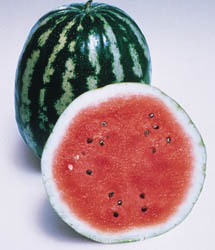
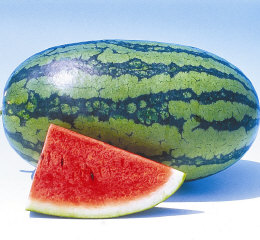
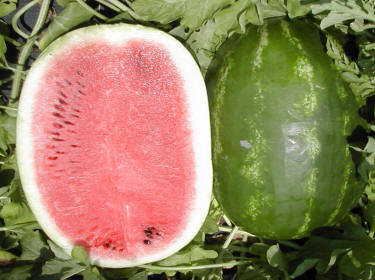
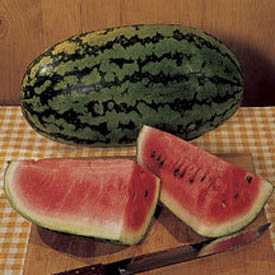
Citrullus lanatus /Watermelon is a fruit that is also a vegetable that is tender and grows in a warm season. It is cultivated in warmer temperatures of all parts of a country. It has a sweet taste and is also known as quenching fruit. It has a round or oblong shape with stripes or spots. In 96 countries, above 1200 varieties of watermelons are cultivated. This fruit is a great source of Vitamin C, copper, pantothenic acid, Vitamin A, potassium, biotin, Vitamin B6, Vitamin B1, and magnesium.
Watermelon Quick Facts
Name:
Watermelon
Scientific Name:
Citrullus lanatus
Origin
Tropical and Subtropical Africa. It was introduced early in the Indian and Mediterranean areas. It is widely cultivated and naturalized there. It was widely cultivated for over 4,000 years in Africa.
Colors
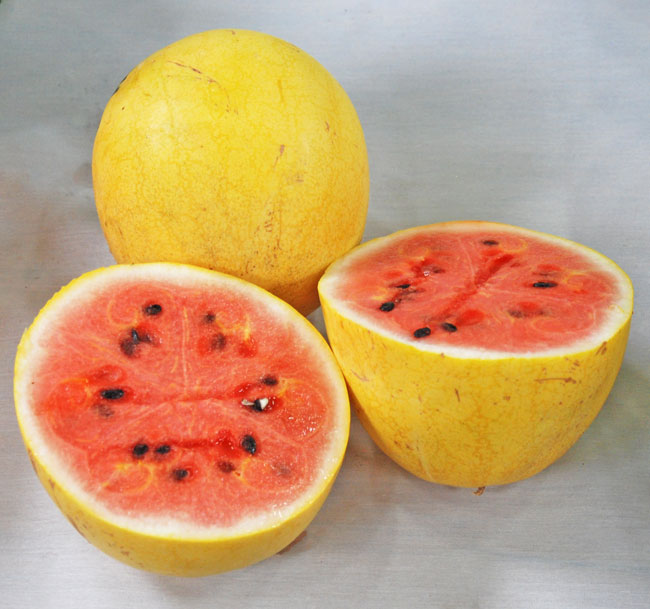
Green, rarely yellow (Fruit)
Shapes
Rounded or oblong; subglobose; Diameter: 1.5-20 cm (0.59-7.87 inches) (Fruit)
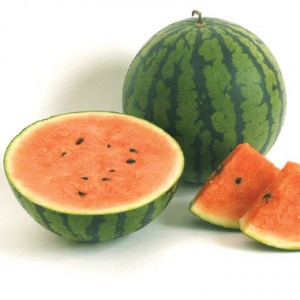
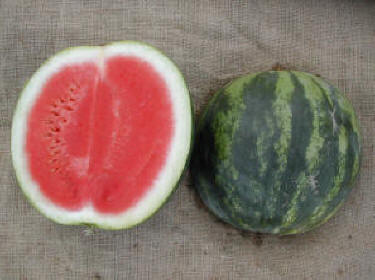
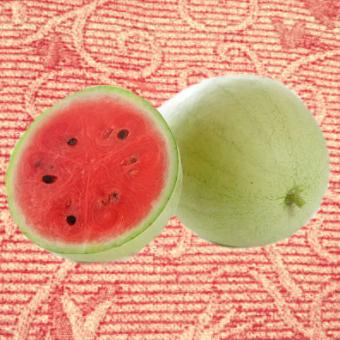
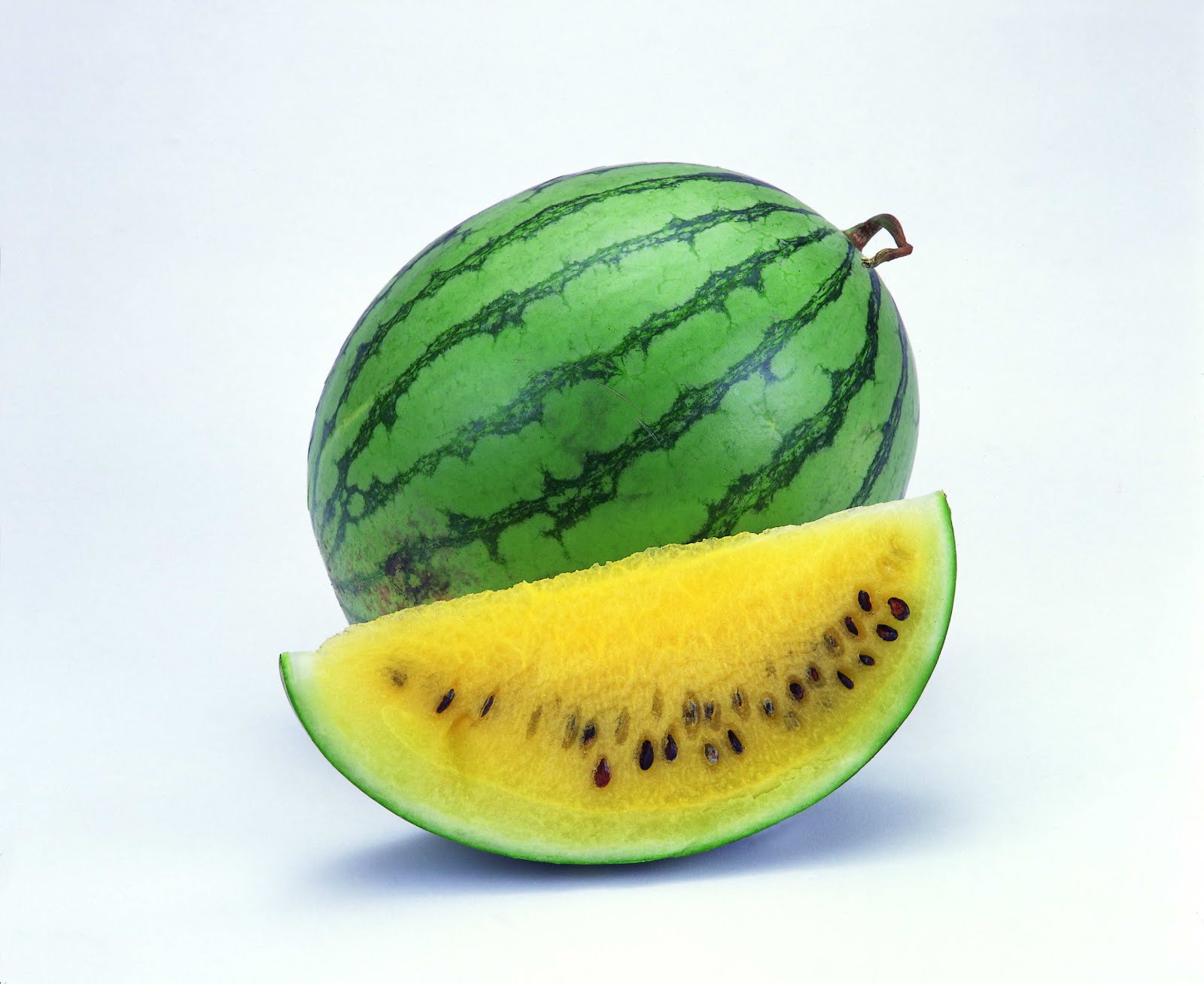
Watermelon is the plant of the Cucurbitaceae family which bears sweet, edible, and fleshy fruit. Botanically, Watermelon is a fruit that has a sweet, too bland to bitter taste. It is a creeping vine that bears rounded or oblong fruit that is also used as vegetables. The skin of the fruit is green, rarely yellow with stripes or dots. The fruit contains pulp and seeds. Native to tropical and subtropical Africa, it was introduced early in the India and Mediterranean areas. It is widely cultivated and naturalized there. It was widely cultivated for over 4,000 years in Africa. Watermelon is also known as Bastard-melon, Watermelon, Dessert watermelon, Afghan melon, Bitter-melon, Egusi, and Wild melon.
WATERMELON FACTS
Name
Watermelon
Scientific Name
Citrullus lanatus
Native
Tropical and Subtropical Africa. It was introduced early in the Indian and Mediterranean areas. It is widely cultivated and naturalized there. It was widely cultivated for over 4,000 years in Africa.
Wild watermelon is widely cultivated in Asia and Africa but was originated from Southern Africa. It occurred naturally in Namibia, Botswana, Mozambique, Zimbabwe, Malawi, and Zambia. Watermelon was cultivated as a crop in ancient times in Egypt. It got reached India in prehistoric times but reached China in the eleventh century. Today China is considered the largest producer of Watermelon in the world. From Africa, Watermelon reached Europe where it was cultivated in the warmer parts of the Mediterranean. In the 17th century, it was cultivated on the rest of Europe didn’t state growing watermelons until the 17th century.
Plant
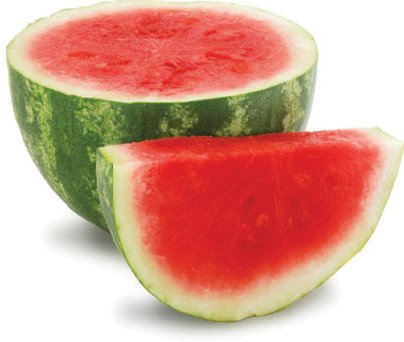
Watermelon is a creeping herbaceous vine that roots in the ground and grows upto 10 m or 32.8 ft long. The vine has alternate and large leaves which measures up to 60-200 mm long; 40-150 mm wide and pinnately lobed. The flowers are axillary, yellow, or green and measure upto 1.5 cm long. The plants have fruit upto 1.5-20 cm (0.59-7.87 inches) in diameter which is rounded or oblong or subglobose. The flesh is deep red, pink, orange, yellow, or white. It contains dull brown seeds that are flattened, ovate, and 0.35 – 0.47 × 0.19 – 0.27 inch (9-12 × 5-7 mm). The fruit usually weighs upto 20 kg.
Nutritional value
152 grams of raw Watermelon offers 46 calories with 6889 µg of lycopene, 12.3 mg of Vitamin C, 11.48 g of carbohydrate, 0.064 mg of copper, 0.336 mg of Vitamin B5, 43 µg of Vitamin A, 0.068 mg of Vitamin B6, 0.36 mg of Iron, 0.05 mg of Vitamin B1, 170 mg of potassium, 15 mg of magnesium and others.
Nutritional value of Watermelon, raw
Serving Size: 1 Cup diced, 152 g
Calories 46 Kcal.Calories from Fat 2.07 Kcal.
Proximity
Amount
% DV
Water
139 g
N/D
Energy
46 Kcal
N/D
Energy
193 kJ
N/D
Protein
0.93 g
1.86%
Total Fat (lipid)
0.23 g
0.66%
Ash
0.38 g
N/D
Carbohydrate
11.48 g
8.83%
Total dietary Fiber
0.6 g
1.58%
Soluble Fiber
9.42 g
N/D
Insoluble Fiber
1.84 g
N/D
Total Sugars
2.4 g
N/D
Sucrose
5.11 g
N/D
Glucose (dextrose)
0 g
N/D
Fructose
0.09 g
N/D
Minerals
Amount
% DV
Calcium, Ca
11 mg
1.10%
Iron, Fe
0.36 mg
4.50%
Magnesium, Mg
15 mg
3.57%
Phosphorus, P
17 mg
2.43%
Potassium, K
170 mg
3.62%
Sodium, Na
2 mg
0.13%
Zinc, Zn
0.15 mg
1.36%
Copper, Cu
0.064 mg
7.11%
Manganese, Mn
0.058 mg
2.52%
Selenium, Se
0.6 µg
1.09%
Fluoride
2.3 µg
0.06%
Vitamins
Amount
% DV
Water soluble Vitamins
Vitamin B1 (Thiamin)
0.05 mg
4.17%
Vitamin B2 (Riboflavin)
0.032 mg
2.46%
Vitamin B3 (Niacin)
0.271 mg
1.69%
Vitamin B5 (Pantothenic acid)
0.336 mg
6.72%
Vitamin B6 (Pyridoxine)
0.068 mg
5.23%
Vitamin B9 (Folate)
5 µg
1.25%
Folic Acid
0 µg
N/D
Folate, food
5 µg
N/D
Folate, DEF
5 µg
N/D
Choline
6.2 mg
1.13%
Vitamin C (Ascorbic acid)
12.3 mg
13.67%
Fat-soluble Vitamins
Vitamin A, RAE
43 µg
6.14%
Vitamin A, IU
865 IU
N/D
Beta Carotene
461 µg
N/D
Beta Cryptoxanthin
119 µg
N/D
Betaine
0.5 mg
N/D
Lycopene
6889 µg
137.78%
Lutein + zeaxanthin
12 µg
N/D
Vitamin E (alpha-tocopherol)
0.08 mg
0.53%
Vitamin K (phylloquinone)
0.2 µg
0.17%
Lipids
Amount
% DV
Fatty acids, total saturated
0.024 g
N/D
capric acid 10:00 (decanoic acid)
0.002 g
N/D
Lauric acid (dodecanoic acid) 12:00
0.002 g
N/D
Palmitic acid 16:00 (Hexadecanoic acid)
0.012 g
N/D
Stearic acid 18:00 (Octadecanoic acid)
0.009 g
N/D
Fatty acids, total monounsaturated
0.056 g
N/D
Oleic acid 18:1 (octadecenoic acid)
0.056 g
N/D
Fatty acids, total polyunsaturated
0.076 g
N/D
Linoleic acid 18:2 (octadecadienoic acid)
0.076 g
N/D
Phytosterols
3 mg
N/D
Amino acids
Amount
% DV
Tryptophan
0.011 g
2.50%
Threonine
0.041 g
2.33%
Isoleucine
0.029 g
1.73%
Leucine
0.027 g
0.73%
Lysine
0.094 g
2.81%
Methionine
0.009 g
N/D
Cystine
0.003 g
N/D
Phenylalanine
0.023 g
N/D
Tyrosine
0.018 g
N/D
Valine
0.024 g
1.14%
Arginine
0.09 g
N/D
Histidine
0.009 g
0.73%
Alanine
0.026 g
N/D
Aspartic acid
0.059 g
N/D
Glutamic acid
0.096 g
N/D
Glycine
0.015 g
N/D
Proline
0.036 g
N/D
Serine
0.024 g
N/D
Flavones
Amount
% DV
Apigenin
0 mg
N/D
Luteolin
0.7 mg
N/D
Flavonols
Amount
% DV
Kaempferol
0.7 mg
N/D
*Above mentioned Percent Daily Values (%DVs) are based on 2,000 calorie diet intake. Daily values (DVs) may be different depending upon your daily calorie needs. Mentioned values are recommended by the U.S. Department of Agriculture. They are not rxharun.com recommendations. Calculations are based on average age of 19 to 50 years and weigh 194 lbs. Source: https://ndb.nal.usda.gov/
Health benefits of Watermelon
Watermelon is the fruit that is free in fat and also an excellent source of Vitamin B6, A and C. It contains lycopene which provides the color of bright red, pink and deep red. It is a great source of antioxidant. Potassium helps to reduce the blood pressure and supports the functions of body organs. It is a great source of minerals and vitamins that helps to prevent health illness such as obesity, mortality, heart disease, diabetes, enhance hair and complexion and increase energy.
Viagra effect
Lycopene and Beta carotene is found in the watermelons that helps to relax the blood vessels. Citrulline converts into arginine when the Watermelon is consumed. Arginine is helpful for the circulatory system and heart that also helps to maintain immune health. Arginine enhances nitric oxide that helps to relax the blood vessels and also prevents erectile dysfunction. It cures high blood pressure, angina, and other cardiovascular ailments. It also eliminates the toxic compounds from the bodies. It contains lycopene which is an antioxidant that protects the prostate, skin and heart health. (1)
Relieves muscle soreness
Watermelon possesses antioxidant properties that help to raise muscle protein and promote athletic performance. The study shows that watermelon is rich in L-citrulline which helps to provide relief from the muscle soreness. The study found that the natural juice containing natural juice seems to be bioavailable. (2)
Lowers blood pressure
Watermelon helps to lower the blood pressure on the heart and aorta. People with high blood pressure and obesity are at high chances of heart attack or stroke when they are exposed to the cold during the winter months. The study shows that Watermelon is helpful for the vascular parameters and aortic blood pressure. (3)
Lowers aortic blood pressure
Watermelon possesses vasodilator properties that help to prevent hypertension which is the major chances for strokes and heart attacks. Watermelon is rich in L-citrulline which is associated with L-arginine that is an amino acid essential to form nitric oxide required to regulate blood pressure and vascular tone. Watermelon is rich in Vitamin C, B6, A and lycopene which is a powerful antioxidant that helps to lower the glucose level of serum. (4)
Treats health ailments
The research shows that the people who drank watermelon juice, their blood levels of arginine was 11 percent and 18 percent more in comparison to those who did not drink the watermelon juice. The study shows that arginine helps to cure the unhealthy level of blood sugar, high blood pressure and vascular ailments related with sickle cell disease. (5)
Reduce atherosclerosis
The study conducted on mice shows that those who drank watermelon juice instead of water had low body weight due to the reduction in fat mass. The concentration of plasma cholesterol and atherosclerotic lesions was reduced. Melon provides various health benefits. The study is still going on to find out the bioactive compounds that help to enhance human health. (6)
Prostate health
High amount of lycopene is found in Watermelon which is an antioxidant that helps to eliminate the prostate cancer. There is a specific relationship between the prevention of cancer and lycopene. The diuretic properties found in Watermelon make the health of urinary tract effective. (7)
Kidney ailments
Watermelons are rich source of potassium that helps to cleanse the toxic substances in kidney. It helps to reduce the uric acid concentration in the blood that helps to lower the risk of kidney damage and forms the renal calculi. It promotes the urination that helps to clean the kidneys due to the high water content. The antioxidants found in Watermelon promote kidney health and lower the signs of premature aging such as age spots and wrinkles. (8)
Prevent cancer
Watermelons have a high concentration of lycopene which is a carotenoid phytonutrient that is associated with the prevention of cancer. The study shows that lycopene helps to reduce the chances of breast, lung, colon, prostate, and endometrial cancer. It also contains Vitamin C which is an antioxidant and serves great anti-cancer activities. (9)
Eye ailments
The adequate intake of Watermelon helps to lower the chances of macular degeneration and eye problems due to the presence of Vitamin C, zeaxanthin, lutein, and beta carotene. It promotes eye health by delaying the chances of age-related blindness as well as degeneration. These antioxidants prevent drying up of eyes, optical nerves and glaucoma. (10)
Cures impotence
Watermelon contains arginine that helps to cure erectile dysfunction and promotes the libido, lowers frigidity. (11)
Traditional uses
The seed possess demulcent, pectoral, diuretic and tonic properties.
It helps to treat urinary passages and bedwetting.
The fruit is consumed ripe.
The fruit is a diuretic that helps to treat renal stones and dropsy.
It contains lycopene which helps to prevent heart attacks.
The fruit is effective for diabetes and alcoholic poisoning.
The intake of a glass of Watermelon juice helps to provide relief from dizziness in sunstroke as well as vomiting.
The consumption of watermelon (500-1,000 grams) twice in a day provides relief from thirst, discharge of yellowish urine, bitter taste in mouth, pain in urethra, bad breath and hangover.
The sundried Watermelon peels are used in Chinese herbalism.
The diabetic patients should steam in water by adding 30 grams of winter melon skin and 30 grams of watermelon skin for thrice a day.
The people with fever, hot stomach, thirst and dry mouth, bad breath should eat 500-1000 grams of melon one or two times in a day.
To eliminate hangover, one should take 500-1000 grams of fruit or 60 grams of skin which should be steamed in water and then serve.
50 grams of dried watermelon peels should be boiled in water and consumed as tea to tin order to treat hypertension, nephritis, diabetes and hangover.
The root is used as a purgative but it is emetic in large doses emetic.
The seeds are demulcent, pectoral, diuretic and tonic.
In Northern Sudan, it is useful for burns, rheumatism, swellings, and gout.
It is used for purifying bladder and kidney; prevent erectile dysfunction and treats hepatomegaly as well as jaundice.
Watermelon fruit pulp, juice, and seeds have been used as a diuretic.
The juice extracted from roots helps to treat hemorrhage after abortion.
Juice of fruit use as antiseptic in typhus fever.
In China, the dried fruit is useful for mouth sores.
The pericarp is used to treat diarrhea in Tonkin.
Seeds help to relieve the symptoms of acute cystitis.
In traditional Chinese medicine, it is used to provide relief from excessive thirst, scanty urination, urinary tract infections and icteric hepatitis.
In Chinese herbal medicine, it is used to cure erectile dysfunction, diabetes, acne, and nephritic edema.
Precautions
It should not be consumed after meals because it results in vomiting.
People with diarrhea should not consume watermelon.
The unsure people should consult the experienced medical practitioner.
The excessive consumption of Watermelon causes vomiting, nausea, bloating, diarrhea, gas, indigestion, irregular heartbeats and allergic reactions such as facial swelling, severe rashes and anaphylaxis.
Due to the high amount of potassium content in Watermelon, it could lead to the ailments of nervous system and heart.
It could damage the control of motor nerves and kidneys.
The people with kidney ailments should avoid it because it could lead to the internal damage.
It may lead to the allergic reactions such as itching, rashes, sneezing, etc.
It could reduce the blood pressure.
How to Eat
The fruit is consumed raw as a refreshing drink.
Unripe fruits are added to the soups.
The fruits are used to make jams.
Seeds are consumed raw or cooked.
The roasted seeds are used with cereal flours to make cakes, bread, etc.
It is also added to make stews or soups.
It is added to the fruit salads by making cubes or sections.
It could be made into jam, fruit cocktails, sorbet, and juice.
The seeds are roasted and eaten as a snack in some Asian countries.
In China, rinds are stewed or stir-fried.
In the South, it is used in form of pickles.
In Asian countries, the seeds are roasted and consumed as a snack food.
Watermelon could be mixed with salt, red onion (thinly sliced), and black pepper.
Other Facts
Watermelon is considered both a vegetable and a fruit.
It belongs to the same family of pumpkin, cucumber, and squash.
The watermelon is the official state vegetable of Oklahoma.
Watermelon contains about 92% water and 6% sugar.
Due to the rich electrolyte and water content, it is regarded as the thirst quenchers.
Watermelon contains Vitamin C, B1, and manganese that helps to prevent infections.
China is largest producer and Turkey is the second-largest producer of Watermelon in the world.
In China, rinds are stewed, stir-fried or pickled and also used as a vegetable.
There are above 1200 varieties of Watermelon which is available in different weights, sizes, shapes and color such as red, yellow, orange or white.
The weight of the heaviest watermelon is 121.93 kg or 268.8 lb.
Watermelon contains more lycopene in comparison to raw tomatoes.
The juice of Watermelon may provide relief from muscle soreness.
Watermelon doesn’t contain any cholesterol or fat and is rich in fiber, Vitamins C & A, and potassium.
Watermelon is cultivated in over 96 countries in the world.
In Egypt and Israel, Watermelon is paired with feta cheese.
Even the rinds and seeds of Watermelon are edible.
Types of Watermelon
Watermelon is a plant which grows like a vine indigenous to the Southern Africa. Watermelon is a pepo that has thicker skin and a fleshy heart. The fruit watermelon has green to white external skin with succulent and sweet internal flesh whose color ranges from deep red to pink.
1. Sugar Baby
The sugar baby measures from 9-13 pounds is usually which is also known as icebox watermelon. It was created in 1955 which is a fairly sweet fruit having dark green skin.
2. Sangria
Sangria was created in 1985 which has scarlet-colored and nonfibrous tissue.
3. Golden Midget
It has spectacular golden skin and weighs upto 3 pounds. The skin turns yellow when it gets ripened. It was produced by Elwyn Meader and Albert Yeager in 1959.
4. Starlight
It is the fruit of amaranth colored. It is transportable and gratifying.
5. Jubilee
Jubilee was created in 1963 which weighs up to 45 pounds. It exceeds above 32 pounds when ripened completely.
6. Starbrite
It is pink which has medium to firm flesh which is great for puréeing into sorbets or granites.
7. Extazy
Ecstasy is seedless which measures upto 5 pounds and is mainly cultivated in Arizona and California.
8. Stars ‘n’ Stripes
It is a crossbreed which has green stripes on its skin, and may weighs about 30 pounds. It has a firm and fairly sweet tissue.
9. Mickylee
Mickylee has attractive and speckled skins with red flesh. It measures about 12 pounds.
10. Yellow Baby
This crossbreed has the yellow doll in the skin design and the flesh color.
11. Yellow Doll
It weighs about 8 pounds. It has golden fleshed and tastes extra sweet. It is great for fruit smoothies and iced beverages.
12. Little Baby Flower
It has pink flesh which ripens fast and weighs above four pounds.
13. Crimson Sweet
Crimson sweet has bright red flesh which has a sweet taste.
14. Pixie
It is a seedless melon that weighs about 6 pounds and has thick lines in the skin. It is a very sweet and seedless fruit.
15. Summer Flavor
Summer flavor is a combination of crimson sweet and sweet.
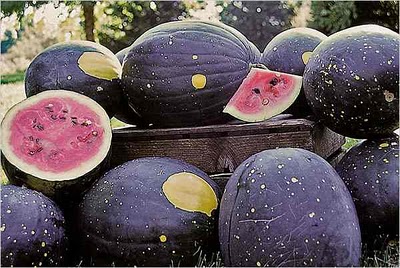
16. Moon and Stars
It has lemon-colored dots which measures about 40 pounds. It got launched in the 1920s.
17. Sweet Favorite
It has light green patches on blue to the green rind. It has succulent and ruby-colored fruit.
18. Cream of Saskatchewan
This melon has a creamy flesh and weighs about 10 pounds. The cultivar has been said to have been delivered to North America by Russian immigrants whom settled within the Canadian land of Saskatchewan.