

Carissa carandas is a species of flowering shrub in the family Apocynaceae. It produces berry-sized fruits that are commonly used as a condiment in Indian pickles and spices. It is a hardy, drought-tolerant plant that thrives well in a wide range of soils. Common names in English include Bengal currant, Christ’s thorn,carandas plum, and Karanda.[rx][rx]
The supposed varieties congesta and paucinervia actually refer to the related conkerberry (C. spinarum).
| Karanda Quick Facts | |
|---|---|
| Name: | Karanda |
| Scientific Name: | Carissa carandas |
| Origin | India, Burma and Malacca and dry areas of Ceylon |
| Colors | Pinkish white and become red to dark purple when ripe |
| Shapes | Oblong, broad-ovoid or round, 1/2 to 1 in (1.25-2.5 cm) long berries smooth and glossy |
| Flesh colors | Red or pink, juicy pulp |
| Taste | Sour, sweet |
| Major nutrients | Copper (213.33%) Iron (129.13%) Vitamin C (56.97%) Zinc (29.64%) Manganese (8.70%) |
| Health benefits | Beneficial for rheumatoid arthritis, anorexia, indigestion, colic, hepatomegaly, splenomegaly, piles, cardiac diseases, edema, amenorrhea, fever, and Nervine disorders |
Carissa carandas or Carissa congesta is a species of flowering shrub in the dogbane family, Apocynaceae. It is commonly known as kerenda in Malaya, Karanda in India, Bengal current or Christ’s thorn in South India, namdaeng in Thailand, caramba, caranda, Saranda and perunkila in the Philippines. The plant is native and common throughout much of India, Sri Lanka, Malaysia, java, Pakistan, and Myanmar. It grows naturally in the Himalayas at elevations of 300 to 1800 meters, in the Siwalik Hills, the Western Ghats, and in Nepal and Afghanistan. In regions with high temperatures, it flourishes well. A few of the common names of the plant are Bengal-currants, Carandas-plum, Karanda, Christ’s thorn, Jasmine flowered carrisa, Karanda, Karanda, and black currants. The entire plant has medicinal values. Carissa carandas plants are used to cure various diseases such as asthma, skin disease, cough, cold, and tuberculosis. They usually are prepared as fresh juices rather than boiling water and decoction leaves and flowers of Carissa carandas. Juice from the leaves plays an important role in this matter.
Plant Description
Karanda is a rank-growing, straggly, woody, climbing shrub, growing to 10 or 15 ft. (3-5m) tall sometimes ascending to the tops of tall trees, and is rich in white, gummy latex. The plant is common in plains and scrub jungles along river banks and normally prefers deep, fertile, well-drained soil but if the soil is too wet, there will be excessive vegetative growth and lower fruit production. Branches are numerous and spreading, forming dense masses with sharp thorns, simple or forked, up to 2 in. (5 cm) long, in pairs in the axils of the leaves. Barks are yellowish-brown, peeling in square flakes.
Leaves
Leaves are short petiole, evergreen, opposite, oval or elliptic, 4 to 7.5 centimeters in length, 2.5 to 4 centimeters in width; dark-green, leathery, glossy on the upper surface, lighter green and dull on the underside. If the leaves or stems are injured, the white milky sap is seen, which is characteristic of this group of plants.
Flower & fruit
Fragrant flowers are tubular with 5 hairy lobes which are twisted to the left in the bud instead of to the right as in other species. They are white, often tinged with pink, and borne in terminal clusters of 2 to 12. Small flowers are produced from early spring through late fall. Flowers are followed by fruit cluster of 3 to 10 that is smooth, glossy, oblong, broad-ovoid or round, 1/2 to 1 in (1.25-2.5 cm) long and has fairly thin but tough skin, purplish-red turning dark purple or nearly black and shiny when ripe smooth and glossy enclosing very acid to fairly sweet, often bitter, juicy, red or pink, juicy pulp, displaying spots of latex. Clusters of small black fruit ripen from May through October. The fruits consist of 2 to 8 small, flat, brown seeds. Fruits can be eaten fresh or used for jellies or jam. They are also commonly used as a condiment in Indian pickles and spices.
Varieties
Formerly there were believed to be 2 distinct varieties:
- carandas var. amara: the fruit has oval, dark-purple, red-fleshed fruits, of acid flavor.
- carandas var. dulcis: The fruit has round, maroon, with pink flesh and sweet-sub acid flavor.
Morphological characteristics of Karanda fruits
| Characteristics | Unripe | Ripe |
| Fruit | Drupe, globose, firm berry with thin smooth skin | Drupe, globose, small, easily rupturable, thin smooth skin |
| Color | Light green | Lustrous, dark purple almost black and attractive. |
| Weight (g/fruit) | 1.82 | 2.10 |
| Pulp weight (g/ fruit) | 1.62 | 1.68 |
| Pulp color | Pale green | Dark pinkish purple |
| Seed weight (g/fruit) | 0.20 | 0.42 |
| Pulp: seed ratio | 8:10 | 4:00 |
| Number of seeds/fruit | 3 to 4 | 3 to 4 |
| Volume (ml/fruit) | 3.00 | 2.90 |
| Density (g/ml) | 0.66 | 0.72 |
| Length (cm/fruit) | 1.50 | 1.30 |
| Width (cm/fruit) | 1.30 | 1.17
|
Characterization of Karanda for sensory attributes and utilization
| Characteristics | Unripe | Ripe |
| Taste & Flavor | Sour, slight astringent | Sweet with slight sour taste. Highly acceptable fruity flavor |
| Texture | Firm, seeds soft and chewy | Delicate |
| Edibility | Fruit usually not consumed as such but whole fruit is used for processing | Consumed Fresh, traditionally not processed |
| Edible portion (%) | 89 | 80 |
| Handling properties at ambient | Easy, no special care needed storable for 3 to 4 days | Delicate to handle, spoil in 1 to 2 days |
| Traditional uses | Processed into Chutney and pickles | Table purpose |
| Acceptability | Savored by children in small quantities | Acceptable to all age groups |
Traditional uses and benefits of Karanda Fruit
- Carissa Carandas is supplemented with an Iron component which is beneficial for the anemic patient.
- It bears Vitamin C nutrient which is best for the growth and repair of tissues in the body. Often, it is also used to cure the effect of Scurvy.
- It avoids excessive secretion of the bile by the Liver to prevent Biliousness.
- It provides comfort during Diarrhea.
- The analgesic attribute is essential in providing relief from pain.
- Karanda fruit has an Anthelmintic impact on the Body which expels the Parasitic Worms.
- It is Antipyretic in nature that effectively reduces Fever.
- It is cardiotonic for the body. Thus, it regulates and optimizes the Heart functions to avoid Heart Diseases.
- It possibly prevents the occurrence of inflammation within the body.
- Due to cytotoxic characteristics, it prevents the growth of cancer and tumor cells. Therefore, it is a beneficial remedy for Cancer and Tumor patients.
- Being depressant in nature reduces excitability to cure Anxiety.
- It is suggested during Constipation to get relief.
- It strengthens and tones up the stomach to keep stomach-related problems at bay. It is also used during Stomach aches.
- It has a thermogenic attribute that is powerful in reducing weight. Thus, it is an effective medication for Obesity.
- It stops Internal Bleeding.
- It alleviates Cough.
- It powers up the digestive System to avoid Indigestion and digestive disorders.
- It removes impurities from the Blood.
- It is advantageous in reducing blood sugar levels and aids in curing Diabetes.
- Leaves, fruits, and seed latex are used for treating rheumatoid arthritis, anorexia, indigestion, colic, hepatomegaly, splenomegaly, piles, cardiac diseases, edema, amenorrhea, fever, and Nervine disorders.
- Fruits’ seeds and latex are used for curing worm infestation, gastritis, dermatitis, splenomegaly, and indigestion in Siddha medicinal system.
- The plant is also useful to bring down blood pressure.
- Fresh fruit juice of Karanda is consumed in a dose of 10-15 ml to improve the appetite and digestion.
- Decoction of the root is given in a dose of 30-40 ml to treat difficulty in micturition.
- Fresh juice of the fruit of Karanda is consumed daily in a dose of 15-20 ml to strengthen the cardiac muscles.
- The stem bark of Karanda is given in a dose of 40-50 ml to treat different skin diseases.
- Paste prepared from the leaf or bark is applied over fresh wounds for its treatment.
- Paste of the root is applied over the diabetic ulcers.
- Leaf decoction is valued in cases of intermittent fever, diarrhea, oral inflammation, and earache.
- Leaf extract is externally applied for curing leprosy.
- The root is pulverized with horse urine, lime juice, and camphor as a remedy for the itch in Konkan, India.
Ayurvedic Health benefits of Karanda fruit
- Ascaris: Consume 10 ml root decoction of Karanda twice a day.
- Biliousness: Consume 4-gram unripe fruit of Karanda once a day.
- Fever: Make leave decoction of Karanda. Drink a cup of it twice a day.
- Internal Bleeding: Eat 10 grams of ripe fruit of Karanda once a day. It helps to cure internal bleeding.
- Bleeding gums: Consuming 1-2 fruits of Karanda regularly is beneficial for bleeding gums.
- Abdominal pains: Consuming 1 gram powder of Karanda root along with honey is beneficial for abdominal pain.
- Dry cough: 5 ml Leaf juice is mixed with honey and is consumed regularly to overcome dry cough.
- Diarrhea: 1-2 grams of unripe fruit powder along with root powder of Karanda is beneficial for diarrhea and other abdominal diseases.
- Abdominal problems: Consuming 1-2 grams of Karanda root powder is considered beneficial for abdominal problems.
- Excessive Thirst: Consuming 1-2 grams of unripe fruit powder is beneficial for indigestion, anorexia, and other problems.
- Anorexia: Consuming the ripe fruits of Karanda is considered beneficial for anorexia and other diseases with Pitta predominance.
- Abdominal pain: Consuming 1-2 gram flower powder of Karanda is beneficial for abdominal pains.
- Dysuria: Paste prepared from 1 gram root along with milk is considered beneficial for Dysuria.
- Ascites: People suffering from ascites should consume leaf juice of Karanda from 5 ml first day,10 ml second day until you reach 50 ml, and after decrease the dose until you reach 5 ml. It is considered beneficial for ascites.
- Menorrhagia: Paste prepared from 1-2 gram Karanda root along with milk is considered beneficial for menorrhagia.
- Eczema: Paste prepared from Karanda root when applied over the affected area is quite beneficial for eczema and itching.
- Skin Disorders: Paste prepared from the ripe fruit of Karanda when applied over the affected area is beneficial for Eczema, itching, and other skin-related problems.
- Itching: Root paste is boiled in oil and the oil is then filtered. Such oil when applied over the affected area is considered beneficial for itching.
- Ulcer: Paste prepared from Karanda root when applied over ulcer is considered beneficial.
- Fever: Leaf decoction 10-20 ml of when consumed regularly is quite beneficial for overcoming fever.
- Rhagades: Paste prepared from Karanda seeds when applied over the cracked foot helps to heal them faster.
- Mental Health: Regular use of fruits of Karanda is quite beneficial for mental health.
- Epilepsy: Paste prepared from 5-gram Karanda leaf and yogurt when consumed frequently is beneficial for epilepsy.
Culinary Uses
- Sweeter types may be eaten raw out-of-hand.
- Unripe ones are sour and can be used for making pickles and chutneys.
- Ripe fruits can be used while preparing salads, jellies, puddings, jams, juices, carbonated drinks or wine.
- Plant fruits are a good substitute for gooseberries.
- Fruit exudes much gummy latex when being cooked but the rich-red juice becomes clear and is much used in cold beverages.
- With skin and seeds removed and seasoned with sugar and cloves, they have been popular as a substitute for apple in tarts.
- In many parts of India, fruits are commonly cared for with green chilies to make a tasty dish taken with chapattis.
Recipes
Karanda chutney

Ingredients
- Cumin seeds – 1 teaspoons
- Red chilli ground – 1 teaspoons
- Juice of one lemon
- Salt – 1. 1/4 teaspoons
- Karanda – 300 grams
- Green coriander – 1/2 cup
Method:
- Split karundas and removes its seeds.
- Grind seedless karanda, salt, mirch, jeera, and dhania together finely. If thick, add some water.
- Put this chutney in a bowl adds lemon juice and taste it.
Karanda Jam
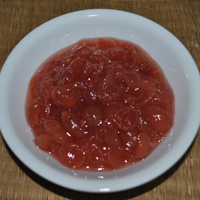
Ingredients:
- 1/2 kg Karanda
- 1 kg Sugar
- 4 cups Water
Method
- Boil the karanda in water on a low fire.
- When tender, remove from fire and pass it through a sieve.
- Add sugar to the pulp, cook on a hot fire, stirring constantly until thick color becomes slightly golden.
- Test the jam, when ready.
- Cool it and fill in airtight jar.
Sweet and Spicy Karanda Pickle with Green Chilies and Garlic
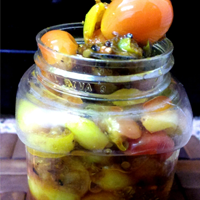
Ingredients
- Karanda – 200 gm.
- Green chilies – 3-4 medium size
- Garlic pods – 4/5 big ones
- Coriander seeds – 11/2 teaspoon
- Cumin Seeds/ – 1/2 teaspoon
- Fenugreek Seeds/ – 1/2 Teaspoon
- Nigella Sativa / – 1/4 teaspoon
- Mustard seeds -1/4 teaspoon
- Fennel Seeds – 1/2 teaspoon
- Turmeric Powder – 1/2 teaspoon
- Coriander Powder- 1/2 teaspoon
- Red Chilli Powder – 1/4 teaspoon
- Salt to taste
- Sugar- 1-2 teaspoon (optional)
- Mustard Oil – 3 table-spoon
Method
- Wash and wipe clean Karanda. Take fruit which is not bruised or damaged.
- Slit the fruit in longitudinal halves and discard the seeds.
- Place it in water. Cut green chilies to any size you wish.
- Heat a heavy bottom pan and add mustard oil to it. Bring it to smoking point and turn off the gas. Add mustard, nigella and cumin seeds and let them splutter. Add fenugreek seeds and let it turn a slight golden in color.
- Dry roast coriander seeds and fennel and grind them coarsely. Some people prefer to grind them smooth.
- Add the chopped green chilies and garlic pods slit in halves along with the karanda fruit to the crackling mixture and stir well. Keep the flame low.
- Add turmeric powder, and other spices along with salt.
- Stir so that the fruit is covered properly with the spices. Add the sugar. Stir again and turn off the gas.
- Let the mixture cool at room temperature and then bottle it in an air tight jar.
- Your pickle is ready to eat.
Other facts
- White or yellow wood is hard, smooth and useful for fashioning spoons, combs, household utensils and miscellaneous products of turnery.
- Wood is occasionally burned as fuel.
- Thorny branches used as fencing material.
- Karanda leaves have furnished fodder for the tussar silkworm.
- Paste of the pounded roots serves as a fly repellent.
- Traditional healers of Chhattisgarh use the different plant parts to cover the cancerous wounds and to kill the maggots.
- Bhil tribe in Rajasthan sells karanda leaves for use as rolling tobacco paper to beedi manufacturers.
- Wood is used for making household furniture and for turning.
Precautions
- Avoid massive intake for long periods. It may effects the sexual health and may reduce the semen production and leads to low libido.
- Excessive use of the fruit of Karanda can cause hyper acidity.
- Unripe fruit may cause burning sensation and worsening of bleeding disorders.
References





